

On April 26, 1937, fascist planes bombed the defenseless town of Gernika.
Recommended music videos for initiation to classical music


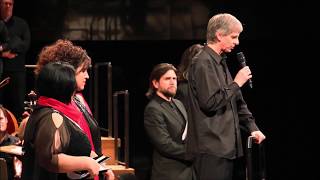
Pablo Sorozábal (1897-1988) was born in Donostia/San Sebastián , according to his own memoirs, “into a working-class, Basque-speaking family.” He began his violin studies at the San Sebastián Municipal Music Academy ; at 17, he joined the San Sebastián Casino Orchestra, and at 21, the Madrid Philharmonic . With a scholarship from the Gipuzkoa Provincial Council, he furthered his studies in Leipzig and Berlin . Due to his republican ideals, after the Spanish Civil War , he was isolated as a composer, making it difficult for him to premiere his various zarzuelas in Madrid . His tenure as conductor of the Madrid Symphony Orchestra ended badly in 1952 when he was forbidden from performing Shostakovich 's Leningrad Symphony , an incident that led to his resignation.
The bombing of Gernika , a city that symbolized Basque rights, was an aerial attack on the civilian population of this defenseless Basque town. The massacre took place on April 26, 1937 , carried out by the German Condor Legion and the Italian Aviazione Legionaria , who were fighting for the Nationalist side against the government of the Second Spanish Republic .
In remembrance of that massacre, Sorozábal finished rewriting the cantata Gernika in 1976, which we present today, for choir and orchestra with lyrics by Nemesio Etxaniz ; a cantata that is a reworking of the Gernika Funeral March , originally written for a group of txistus and horns. The version we offer today is conducted by the Argentinian maestro Xabier Iñaki de Arza Blanco .
Ludwig van Beethoven (1770-1827), along with Bach and Mozart, forms part of the trio of giants of Western music. Born on December 16, 1770, in Bonn , his Flemish father attempted to showcase him as a second Mozart , though this proved a notable failure. Despite this, from the age of nine, the organist Christian Gottlob Neefe captivated him with the study of Bach , whose influence he would always hold dear. In 1787, he moved to Vienna intending to study with Mozart , but his mother's death forced him to return to Bonn a few days later. After five years, he returned to Vienna, where he was able to study with Haydn and Salieri . However, his career as an excellent pianist was cut short by the deafness that struck him the following year, leaving him completely unable to play.
The catalogue of Beethoven's works . There are 138 musical works composed by Beethoven , arranged by numbers known as opus ("work" in Latin) or its abbreviation op. , assigned by the composer's publishers during his lifetime. In addition, there are another 205 works without opus numbers that were published after the composer's death. These works were assigned WoO numbers (Werke ohne Opuszahl, "works without opus numbers"). This catalogue was first compiled by Georg Kinsky and Hans Halm (Das Werk Beethovens) in 1955.
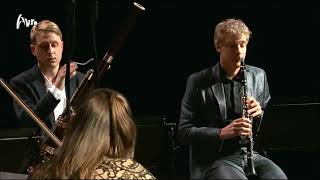
Ludwig van Beethoven 's Septet in E-flat major for clarinet, horn, bassoon, violin, viola, cello, and double bass, Op. 20 , was sketched in 1799, completed and premiered in Vienna in 1800, and published in 1802. The score contains the notation: "Der Kaiserin Maria Theresia gewidmet" (Dedicated to Empress Maria Theresa). It was one of Beethoven 's most popular works during his lifetime, much to the composer's dismay. Several years later, Beethoven even wished the score would be destroyed, saying, "Damn work! I wish it would be burned!" The Septet was extremely popular, especially in Paris , where it was performed for decades, often more than once a year by members of the Orchestra de la Société des Concerts du Conservatoire .
Today we have the septet made up of Janine Jansen (violin), Dana Zemtsov (viola), Jens Peter Maintz (cello), Stacey Watton (double bass), Martin Fröst (clarinet), Jasper de Waal (horn), and Fredrik Ekdahl (bassoon).
May 1st , also known as International Workers' Day or Labor Day , commemorates the historic struggle of the labor movement for better working conditions and recalls the protests of workers in Chicago in 1886, who demanded an eight-hour workday. During those demonstrations—especially in the events known as the Chicago Martyrs —several workers were repressed, arrested, and executed. As a result, in 1889 the International Socialist Congress declared May 1st a day of recognition and tribute to the labor movement.
Today, this date symbolizes the defense of labor and social rights with decent working conditions (fair wages, reasonable hours, job security), as well as union struggle and solidarity among workers.
The Internationale (French for "The Internationale") is the most emblematic song of the labor movement . It is considered the official anthem of workers worldwide and of most socialist and communist parties, as well as some anarchist organizations. The original lyrics, in French, are by Eugène Pottier and were written in 1871 as part of his work Revolutionary Songs . In 1888, Pierre de Geyter set it to music at the request of Gustave Delory , leader of the French Workers' Party in Lille , France , for the repertoire of the party's choir , the Workers' Lyre (La Lyre des Travailleurs). In 1889, it was adopted as the anthem of the Second International (now the Socialist International ) and as the anthem of the USSR from its creation in 1922 until 1944.
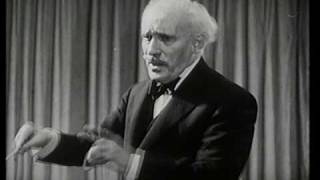
Today we offer this historic document in which the NBC Symphony Orchestra and the Westminster Choir, conducted by the legendary Arturo Toscanini, offer us the Internationale.
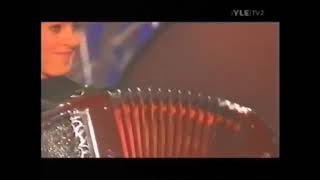
Richard Galliano (Cannes, 1950) is a French-Italian jazz composer and accordionist. He began playing piano and accordion with his father, Lucien Galliano , an Italian living in Nice . He later furthered his studies with Professor Claude Noël , who introduced him to the world of jazz . He continued his musical studies at the Nice Conservatory , then directed by organist Pedro Cochereau . There he took classes in counterpoint, harmony, and trombone. In 1983, Astor Piazzolla invited Richard Galliano to be the lead bandoneon soloist in a French comedy with music by Piazzolla himself. This marked the beginning of a close friendship between the two musicians, which lasted until Piazzolla 's death in 1992.
The accordion is a wind instrument consisting of a bellows, a keyboard, and two wooden sound boxes. The bellows are enclosed at both ends by the wooden boxes. The right-hand side of the accordion also has a keyboard with a layout of keys that can be either piano-style ( piano accordion ) or round keys (also called buttons ); the left-hand side has buttons on both types of accordion for playing bass notes and accompaniment chords.
Today, the Gipuzkoa accordionist Idoia Laburu offers us Galiano 's short composition, Fou rire.
Recommended classical music videos
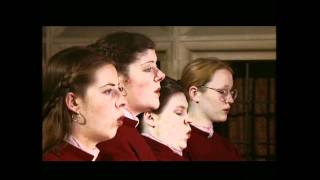
Gregorio Allegri (1582-1652) was an Italian priest, singer, and composer. He began his musical career as a boy soprano at the church of San Luigi dei Francesi in Rome with the maestro di cappella Giovanni Bernardino Nanino from 1591 to 1596, the year his voice changed. He studied music with Giovanni Maria Nanino , Bernardino 's brother and a friend of Giovanni Pierluigi da Palestrina . In 1629, he joined the Papal Chapel Choir , remaining there until his death; the position provided him with prestige and financial security. His work, primarily sacred music, includes numerous masses, motets, lamentations, magnificats, concertini for solo voice, and more. He also composed a four-part sonata for strings, considered the prototype of the string quartet.
Miserere. His most famous work is the music he composed for the psalm Miserere mei, Deus, around 1638. Since then, the work has been regularly performed during Holy Week in the Sistine Chapel . It is written for two choirs, one of four voices and the other of five. One choir sings a simple version of the original theme, and the other, at a distance, sings a more elaborate commentary. It is one of the finest examples of the Renaissance polyphonic style, called in the 17th century stile antico or prima prattica , and shows the combined influences of the Roman (Palestrina) and Venetian (Andrea and Giovanni Gabrieli, the double choir) schools.
Initially, the performance of the work outside the Sistine Chapel was prohibited, and anyone who copied it was threatened with excommunication. Despite this, some copies were made. In 1770, Wolfgang Amadeus Mozart , at only 14 years old, after hearing it just once, transcribed the work from memory and then made minor corrections on a second occasion. This feat is generally remembered as a demonstration of Mozart 's genius, and he was even knighted by the Pope upon learning of it. Mozart 's copy, which included improvisations, has not survived.
Today we offer it in a performance by The Choir of Clare College, Cambridge, conducted by its principal conductor, Maestro Timothy Brown .
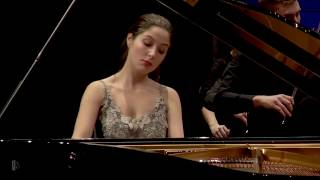
Ludwig van Beethoven (1770-1827), along with Bach and Mozart, forms part of the trio of giants of Western music. Born on December 16, 1770, in Bonn , his Flemish father attempted to showcase him as a second Mozart , though this proved a notable failure. Despite this, from the age of nine, the organist Christian Gottlob Neefe captivated him with the study of Bach , whose influence he would always hold dear. In 1787, he moved to Vienna intending to study with Mozart , but his mother's death forced him to return to Bonn a few days later. After five years, he returned to Vienna, where he was able to study with Haydn and Salieri . However, his career as an excellent pianist was cut short by the deafness that struck him the following year, leaving him completely unable to play.
Beethoven 's musical legacy comprises 32 piano sonatas, numerous works for chamber ensembles, piano and violin concertos, incidental music, sacred music, and, above all, nine symphonies that occupy the zenith of music history . To better understand this legacy, we can divide it into three stages of continuous renewal and refinement: A) Up to 1802. Classical period . This period includes his first ten piano sonatas, the first six string quartets, the septet, the first two symphonies, and the first two piano concertos. B) 1803-1814 . Romantic period . At the height of his artistic maturity and with absolute control of formal structure and lyricism, he composed the symphonies from the 3rd to the 8th, his opera Fidelio, his piano concertos 3rd, 4th, and 5th, the violin concerto, the triple concerto, the piano sonatas "Moonlight" and "Appassionata," the Kreutzer Violin Sonata , and others. From 1815 until his death , he innovated with a more intense musical language, employing bolder harmonic and structural treatments: five final piano sonatas and five final string quartets, Symphony No. 9 with the addition of soloists and chorus, the Missa Solemnis , and others.
The Piano Concerto No. 5 in E-flat major, Op. 73 , popularly known as the "Emperor" Concerto, was Beethoven 's last piano concerto. It was written between 1809 and 1811 in Vienna and is dedicated to Rudolf of Austria , Beethoven 's patron and pupil. It premiered on November 28, 1811, at the Gewandhaus in Leipzig . The nickname "Emperor" was not given by Beethoven himself, but by Johann Baptist Cramer , the English publisher of the concerto.
Structure . The concerto is divided into the three traditional concerto movements: I (0'28") ALLEGRO. As in all of Beethoven 's piano concertos, the first movement is particularly long. In the introduction, the orchestra plays three chords, each followed by a short cadenza , improvisatory in nature but written in the score. The whole is written in sonata form , with three themes, and begins with the distinctive introduction. The first two themes are introduced by the orchestra in the exposition, but at the end of the second exposition, the piano presents a virtuosic and triumphant third theme. The movement's coda is particularly long and complex. II (20'46") ADAGIO UN POCO MOSSO. The second movement possesses great lyricism and is undoubtedly the best known of the three movements. The theme is introduced by the orchestra, followed by the piano exposition. The theme is repeated three times with different variations. The coda ends by slowly introducing the main theme of the third movement. III (28'03 ") RONDO - ALLEGRO MA NON TROPPO. The third movement follows the second without interruption and is a typical Italian rondo in the form (ABACABA ) . The main theme is played by the piano and then answered by the orchestra. Scales on the piano introduce the second theme, which is also answered by the orchestra. In the much longer section C, theme A is presented in three different keys.
Today we present it in a version by the Romanian pianist Alina Bercu accompanied by the Orchestra of the University of Music FRANZ LISZT Weimar conducted by the Uruguayan maestro Nicolás Pasquet .
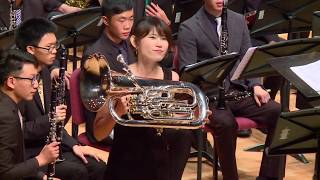
Anthony Barfield (1983) is an American trombonist and composer whose works have been performed in the USA, Europe, and Asia , with commissions from organizations such as the New York Philharmonic and Lincoln Center for the Performing Arts . His works have also been performed by orchestras such as the Toronto Symphony , the Seattle Symphony , and the Kansas City Symphony . As a former trombonist, he has performed in venues including Carnegie Hall, Avery Fisher Hall, Dizzy's Coca-Cola Club, Alice Tully Hall , and the Kennedy Center . Anthony holds trombone performance degrees from the Juilliard School and the Manhattan School of Music and is a professor at the Boston Conservatory at Berklee College of Music.
The euphonium is a brass instrument that plays the baritone-tenor role in wind orchestras or concert bands ; it is also known as the euphonium (“sweet sound”), which highlights the character of its unique sound, making it suitable for the lyrical parts corresponding to that range. The euphonium fulfills the role of the cello in an orchestra in a concert band .
Today we present the Concerto for Euphonium and Concert Band, Heritage (a work based on the ancient culture of Egypt ) by Anthony Barfield structured in three movements: I (0'35") BUILDING THE PYRAMIDS .-. II (9'46") THE NILE .-. III (17'12") PHARAOH THUTMOSE III.
The concert is performed by soloist Li Jiaye accompanied by the Chenggong High School Alumni Band conducted by Maestro Chen Gengyu .
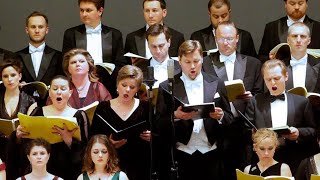
Krzysztof Penderecki (1933–2020) was a Polish classical composer and conductor, known for his distinctive compositional style, particularly evident in his atonal works, some of which have been used in famous films. He studied music at the Kraków Academy of Music with Artur Malawski and Stanisław Wiechowicz . After graduating in 1958, he took a teaching position at the Academy . Penderecki 's early works show the influence of Igor Stravinsky, Anton Webern , and Pierre Boulez . His international recognition began in 1959 at the Warsaw Autumn Festival with the premiere of his piece Lament for the Victims of Hiroshima .
Krzysztof Penderecki 's Polish Requiem is one of the most monumental and emotionally intense choral works of the 20th century . It is a kind of "national Requiem Mass," written between 1980 and 1984 (with later additions until 1993), in which the Polish composer combines the Latin liturgical text of the Catholic Requiem with a profound historical and patriotic charge. Penderecki , who in his early career was a radical avant-garde artist, had by this stage already integrated a more tonal and expressive language, without entirely abandoning his characteristic dissonant textures and choral clusters. More than a religious funeral mass, the Polish Requiem is a work of collective memory , in which Penderecki links his Catholic faith with his historical and national consciousness; it represents, therefore, a reconciliation between the spiritual and the political, between tragedy and hope.
The version we present today stars the soloists Nomeda Kazlaus (soprano, Lithuania), Agnieszka Rehlis (mezzo-soprano, Poland), Adam Zdunikowski (tenor, Poland), Liudas Mikalauskas (bass, Lithuania), with the ensembles Kaunas State Choir (conductor - Petras Bingelis), State Choir "Vilnius" group of men (conductor - Povilas Gylys) and Lithuanian National Opera and Ballet Theatre , all conducted by the Polish maestro Jacek Kaspszyk .
Recommended music videos for all tastes
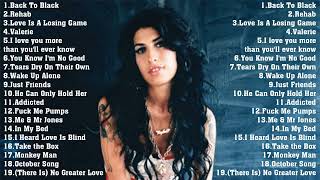
Amy Winehouse (1983–2011) was a British singer and songwriter, known for performing in various musical genres, including jazz, rhythm and blues, soul, and ska . In 2003, she released her debut album, Frank , which was a commercial success and earned her a Mercury Prize nomination. Her second album, Back to Black , was released in 2006 and garnered six Grammy Award nominations, winning five. In February 2007, she won the Brit Award for Best British Female Artist , a World Music Award , and three Ivor Novello Awards. She was found dead in her apartment on July 23, 2011, at the age of 27, after suffering alcohol poisoning. In 2012, Winehouse was ranked 26th on VH1 's list of the "100 Greatest Women in Music."

Alessandro Mahmoud (1992), known professionally as Mahmood , is an Italian singer-songwriter of Egyptian-Sardinian descent. He first rose to fame after competing on the sixth season of the Italian version of The X Factor . In 2019, he won the Sanremo Music Festival with the song " Soldi " and went on to represent Italy at the 2019 Eurovision Song Contest , finishing in second place. His debut album, Gioventù bruciata , was released in February 2019 and debuted at number one on the Italian Albums Chart. Subsequently, in 2022, he won the Sanremo Music Festival again with the song " Brividi ," alongside singer Blanco , and went on to represent Italy at the 2022 Eurovision Song Contest , this time finishing in sixth place.
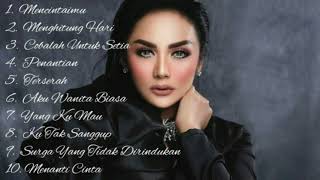
Krisdayanti (1975) is a popular Indonesian singer and actress. Her singing career began when she was just a child; at only nine years old, she started dedicating herself to music, and by the age of twelve, she was recognized as one of the youngest pop artists in her country. Besides being one of the most successful icons in the Indonesian music industry, she has received numerous awards, both domestically and internationally. She was named one of the "10 Greatest Asian Artists" by Channel V in 2005. She is also one of the "99 Most Powerful Women in Indonesia " in the October 2007 issue of Globe Asia magazine and one of "The 50 Greatest Indonesian Singers of All Time" in the December 2010 issue of Rolling Stone .
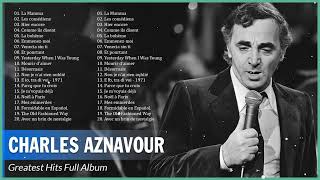
Charles Aznavour (1924–2018), whose birth name was Shahnourh Varinag Aznavourian Baghdasarian , was a French singer, songwriter, actor, director, diplomat, and poet of Armenian descent, nicknamed "The Ambassador of Chanson ." Active until the age of 94, he was considered one of the most popular and longest-serving French singers in the history of music, often described as the French Frank Sinatra . Throughout his career, Charles Aznavour recorded in French, English, German, Spanish, and Italian. Some of his albums have become bestsellers and his songs have been sung and recorded by many artists such as Liza Minnelli, Johnny Mathis, Frank Sinatra, Barbra Streisand, Sting, Bob Dylan, Sammy Davis Junior, Édith Piaf, Nana Mouskouri, Céline Dion, Elton John, Julio Iglesias, Dalida, Mireille Mathieu, Raphael, Plácido Domingo, Paul Anka, Compay Segundo, Dean Martin, Ray Charles, Nina Simone, Shirley Bassey, Luis Miguel ... etc.
Recommended peculiar videos
Georges Bizet (1836-1875) was a French pianist and composer who did not achieve great success during his lifetime. His most famous opera, Carmen , was a sensational success at its premiere, which he did not live to see, as he died three months later of a heart attack at the age of 39. The rest of his works were largely forgotten and only gradually rediscovered in the 20th century . Despite this, he is now considered a brilliant and imaginative composer.
Rodion Shchedrin (1932) is a Russian pianist and composer born into a family of musicians. He was president of the Union of Composers of Russia and a member of the Berlin Academy of Arts ; in 1992 he received the Russian State Prize . In 1967 he composed a suite of the most important themes from the opera Carmen for string orchestra and extensive percussion, which Alberto Alonso used to create a one-act ballet.
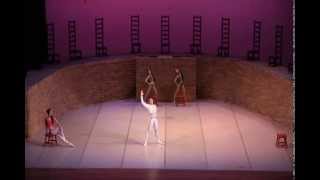
Carmen, Suite. Today we can see it performed by the National Ballet of Cuba , a company founded on October 28, 1948, as the Alicia Alonso Ballet . In 1950, the Alicia Alonso National Ballet Academy was founded, and from that same year onward, Alicia began premiering her own choreographies with the company, which in 1955 became known as the Ballet of Cuba . When the Cuban Revolution triumphed in 1959, the company was reorganized after a period of inactivity and adopted the name National Ballet of Cuba . On March 24, 1980, UNESCO organized an International Gala in Paris in homage to Alicia Alonso . In 1993, the Alicia Alonso Chair of Dance was established at the Complutense University of Madrid .
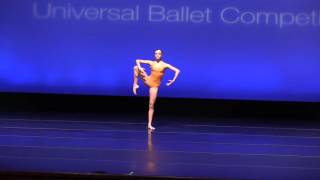
Für Elise (For Elise), a bagatelle written for solo piano, is one of Beethoven 's most popular works. The score was made public 40 years after the composer's death, after his manuscript was found among the papers of a former student. It seems there was a misunderstanding due to the difficulty of reading the title, and instead of " Für Elise ," it was written " Für Therese ," which is how the short piece should be titled.
Today's set design is by the young dancer Vivian Ruiz (2001) born in Florida , USA , and winner of first prizes in multiple competitions.
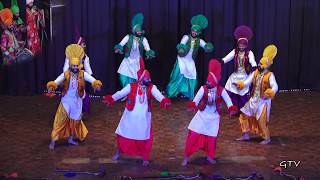
Bhangra is a type of traditional folk dance from the Punjab region of India/Pakistan , on the Indian subcontinent. According to Manuel (2001), bhangra is especially associated with the spring festival of Vaisakhi , which takes place during the harvest season, between April and the first quarter of May. In a typical performance, several dancers execute energetic kicks, jumps, and body flexes (often with raised arms or shoulders) to short songs called boliyan and, above all, to the rhythm of the dhol (double-headed drum). Struck with a heavy stick at one end and a lighter one at the other, the dhol imbues the music with a syncopated (with accents on weak beats) and oscillating rhythmic character that has generally remained the hallmark of bhangra music . Bhangra , a spirited Punjabi dance, originated among Punjabi farmers as a cultural and communal celebration. Its modern evolution has allowed it to preserve its traditional Punjabi roots, while expanding its reach to include integration into popular music and DJing, group competitions, and even exercise and dance programs in schools and studios.

The txalaparta is a traditional percussion instrument from Euskal Herria ; it generally consists of two supports (baskets, chairs, stools, etc.); on these, some insulating material (corn husk, old rolled-up sacks, dry grass, etc.) and on top of this, a board that is struck with four sticks (two for each txalapartari).
Although traditionally each txalaparta had two or three wooden boards, nowadays it's common to find txalapartas made up of a dozen boards. Its use was closely linked to cider making. After crushing the apples, a dinner was held, and the festivities could last until the early hours of the morning. Recently, the Harriparta , or stone txalaparta, has also become popular.
This version of The Internationale is recorded in the language of wood and stone, which together form the melody of the well-known song. The singular and the universal merge: one of the most unique musical instruments of the Basque Country , the txalaparta , plays the universal anthem of the working class. The version is the work of Hutsun Txalaparta Taldea , commissioned by the Basque trade union LAB .
Recommended music videos for children





Various Wikipedia articles and relevant information on Artificial Intelligence were used to prepare these texts.
The texts of Videomusicalis are written in Basque, Spanish and English.