

The San Fermín festivities begin on July 6th at 12 noon with the launching of the Chupinazo.
Recommended music videos for initiation to classical music



Manuel Gainza was a musician from Gipuzkoa, born in Tolosa on May 18, 1885, and died in Getxo on April 1, 1943. A disciple of Gorriti and Mocoroa , he was also the organist of the parish church of Sestao and director of the Orfeón Trabajo y Cultura and the Sociedad Coral de Portugalete (1906-1907). His connection to the choral world is also reflected in the founding of the Coro Biotz-Alai of Getxo in 1926. He composed works for band and for txistu (a Basque flute), and was also the author of various harmonizations; several of his compositions and harmonizations were published in the magazine Txistulari . ( Auñamendi Eusko Entziklopedia )
Biribilketa, Kalejira, Pasacalles, Martxa, Martxea, Karrikadantza, Basque March ... many names to express a single reality: the meaning of these terms is very common: a light march, usually written in 6/8 time (but sometimes in 2/4). The phrases are square, of sixteen bars, although they often consist of eight repeated bars, generally with an antecedent-consequent structure. In general, they fulfill all the conditions of European art music (excerpted from Auñamendi Eusko Entziklopedia).
The Biribilketa de Gainza is the first piece performed at the San Fermín festival after the Txupinazo in the entrance hall of the City Hall , by La Pamplonesa (the Municipal Band) and the Txistularis of Pamplona and Navarre .
Zoltán Kodály (1882-1967) was a Hungarian composer deeply committed to his country's folklore (he collected over 100,000 folk songs) and to music pedagogy. He began his studies in Galánta and later in Budapest . In 1907, he met Debussy , whose music profoundly impacted him. He collaborated extensively with Béla Bartók , and together they laid the foundations for what we now know as ethnomusicology . As a composer, he frequently used both folk melodies and scales, giving prominence to his choral works. As a pedagogue, he made history, and his Kodály Method , in which the voice is the primary instrument, remains relevant today.
Háry János is a popular opera (sometimes called a Singspiel ) that premiered in 1926. It is based on Hungarian folk tales about a peasant soldier named Háry János , famous for telling exaggerated and fantastical stories about his supposed heroic deeds. Háry is not a "realistic" hero: he represents popular imagination, humor, and oral tradition; his stories blend historical fact with pure fantasy. Kodály uses melodies inspired by Hungarian folk music, which he himself had studied and collected along with Béla Bartók.
The Intermezzo ( Interlude ) is an orchestral piece that appears between scenes of the opera and is usually played independently in concerts.
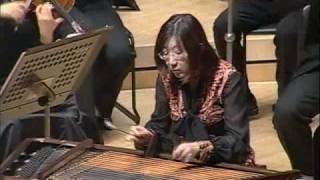
The cymbal is a musical instrument. It is believed that the Romani people brought it to Eastern Europe around the 13th century . It is widely used in the music of countries such as Hungary, Romania, Slovakia, Ukraine, Moldova , and others, as well as in Iranian Persian music , where it is known as the santur . It is a stringed instrument played with a pair of mallets in both hands, striking the strings to produce sound. It is a type of psaltery but larger, although portable versions also exist. The instrument became popular in the Austro-Hungarian Empire and was used by all ethnic groups in the country, including Jewish klezmori musicians, as well as Slavic and Magyar (Hungarian) musicians, Roma (Gypsies), and lautari (lăutari) musicians. The use of this instrument spread at the end of the 19th century , and it replaced the kobza in Romanian and Moldovan folk ensembles. In Wallachia, Romania, it is used almost as a percussion instrument. In Transylvania and Banat, the playing style is more tonal, with heavy arpeggios.
Háry János's Intermezzo is light and dance-like, highly rhythmic with Hungarian influences , particularly in the verbunkos style (traditional music associated with military conscription). Its lively and colorful melodies are easily recognizable; melodies adorned with brilliant orchestration that paints scenes and moods rather than telling a specific story. This intermezzo, featuring the cimbalom , is one of Kodály 's most popular pieces; it is frequently performed in symphonic concerts and educational settings, as it perfectly exemplifies Kodály 's aim: to unite classical music with folk roots.
Today, Junko Sakimura offers it to us on the cimbalom with the Japan Friendship Philharmonic conducted by Maestro Atsushi Takahashi .
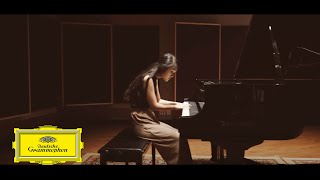
Eunike Tanzil (born August 17, 1998 , in Medan, North Sumatra, Indonesia ) is a composer, pianist, and music producer whose music has been performed by numerous orchestras, including the Los Angeles Philharmonic at the Hollywood Bowl, the Boston Symphony Orchestra, the San Francisco Symphony Orchestra, the Indianapolis Symphony Orchestra, the Royal Philharmonic Orchestra, the National Symphony Orchestra at the Kennedy Center, the Juilliard Orchestra, and the German Symphony Orchestra Berlin . Tanzil began learning piano and the Electone (a versatile digital electronic organ that simulates orchestral and full band sounds) at age 5. In 2014, she represented Indonesia at the Yamaha Electone Concours Asia-Pacific . At 17, Tanzil moved to the USA after winning a full scholarship to Berklee College of Music , where she majored in composition and film scoring, graduating summa cum laude in 2021. In 2024, she signed with Deutsche Grammophon , becoming the first Asian composer to join the label, and released her debut DG single, " Luna ," that same day. In September 2025, she released her debut album, *The First of Everything *, recorded in Berlin with the German Symphony Orchestra Berlin and conducted by Anna Handler . As a producer, Tanzil became the first Indonesian music producer to collaborate with Grammy-winning singer Laufey . In February 2024, she co-produced "Only Mine ," an orchestral jazz-pop song created in partnership with Bose, Porsche, and She Is The Music . That year, Tanzil produced the song "Guratan Tangan ," which appears on the album "Hitam Putih" by Indonesian singer Feby Putri . In 2022, Tanzil received the Morton Gould Young Composer Award from the American Society of Composers, Authors and Publishers (ASCAP) for his contributions to concert music. In 2024, he received the Pianote Composer Award for innovation in piano composition.
Luna is a musical composition by Eunike Tanzil , released as a single in April 2024 under the prestigious Deutsche Grammophon label. Originally written for piano and cello, it premiered with Emanuel Keller on cello and Tanzil herself on piano, although a version for piano alone also exists. The piece is inspired by the moon as a symbol, representing both loneliness and isolation, as well as the inner connection that the celestial body can evoke in human beings. According to the composer herself, “ Luna ” seeks to connect human existence with the enduring nature of the moon. Just as the moon goes through phases and always shines again, the music suggests that people can experience moments of solitude or introspection, conceal emotions, and yet still project strength and perfection from within. In interviews and liner notes, Tanzil has explained that she originally composed “Luna” during a period in her life when she felt strangely alone and far from home while studying abroad. That feeling of isolation—but also of peace and acceptance—influenced the music, which alternates serene moments with more intense and modulated sections.
Pablo Sarasate (1844-1908) was a composer and violin virtuoso born in Pamplona, Spain . A precocious child, his parents, aware of his musical talent, enrolled him in violin studies, which he continued in Madrid and Paris . In 1859, he began his public career, giving concerts throughout Europe and America , remaining active until his death. His universal prestige was evident in the dedications that eminent composers such as Max Bruch , Camille Saint-Saëns , Édouard Lalo, Henryk Wieniawski , Antonín Dvořák , and others added to some of his scores. He died at his home, Villa Navarra, in Biarritz in 1908, at the age of 64.
Catalogue of Sarasate's works . His works are classified by their Opus number (from the Latin opus, 'work'), a term used in music to catalog the works of most composers. Since the 17th century , this form of cataloging has been used whenever a work is published, preceding the work's serial number with the word Opus , or its abbreviation Op .
The Navarrese Jota . As the writer José María Iribarren published in the Diario de Navarra (1966): “The Navarrese jota began to take root in the Navarrese soul during the cholera epidemic of 1885. The city of Tafalla found its medicine in the jota ; alongside the sulfur bonfires, there were the rondallas to soothe spirits. In this way, the jota became intrinsic to Navarre , and especially to the Ribera region .” To all this, Manuel García Matos adds: “The Navarrese jota is closely related to the Aragonese jota; however, it exhibits a greater linear undulation of phrases, with more abundant and longer melismas, and is not subject to the metric regularity of the latter. It has more melodic refinement than the Aragonese jota , and the introduction and instrumental variations are also different.”
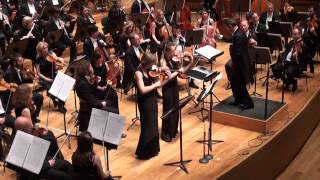
Navarra, op. 33 is a Navarrese jota written by Sarasate for two violins and orchestra, which is performed today by Irina Filimon and Cristina Alecu accompanied by the Castilla y León Symphony Orchestra, all conducted by the much-missed Granada maestro Miguel Ángel Gómez Martínez.
Recommended classical music videos
Johann Sebastian Bach (1685-1750) Today we encounter one of the three giants of Western music, along with Mozart and Beethoven . He was a German violinist, organist, conductor, and composer, born in Eisenach into one of the most prominent musical families in history. In 1703, he obtained his first job in Arndtstadt , and in 1707 he moved to Mühlhausen as organist, where he married his cousin Maria Barbara, with whom he had seven children. After his wife's death in 1720, following a year and a half of widowhood, he remarried Maria Magdalena, with whom he had another thirteen children. In 1723, he moved to Leipzig , where he resided until his death at the age of 65. His influence has been notable on Haydn , Mozart , Beethoven , Mendelssohn , Schumann , Chopin , and many other renowned composers.
The catalogue of Bach's works , or Bach-Werke-Verzeichnis , better known by its acronym BWV , consists of a numbered index of all the composer's works, arranged thematically by genre and whether vocal or instrumental, and used by scholars and musicians worldwide. This catalogue was created in 1950 by the German musicologist Wolfgang Schmieder .
The Orchestral Suites, BWV 1066-1069 (called ouvertures by their composer), are four pieces written by Johann Sebastian Bach between 1725 and 1739 in Leipzig . In a broader sense, the term suite was used in Baroque Germany to refer to a series of dance pieces preceded by an ouverture .
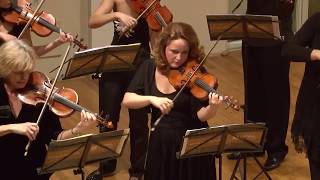
Johann Sebastian Bach 's Orchestral Suite No. 1 in C major, BWV 1066, is one of the four orchestral suites (or ouvertures) by him that have survived. It is a key work for understanding how Bach adopted and transformed the French style within his own contrapuntal language. The work was probably composed between 1717 and 1723, during Bach 's time in Köthen , and basically follows the French model , opening with an Overture followed by a series of stylized dances . In the instrumentation of the basso continuo (cello, double bass, harpsichord), the independence of the bassoon is particularly noteworthy, giving the suite a very distinctive color. This work is the longest and most orchestrally rich of the four suites ; it represents Bach as a master of the secular instrumental genre and shows how dance music can become abstract art, devoid of any actual dance function.
Structure . The work consists of 7 movements, all in C major , organized according to the traditional suite model: I (00``00``) OVERTURE. Typical French form: Slow – Fast (fugado) – Slow ; all within a majestic and ceremonial character. The slow section has very marked dotted rhythms, while the fast part is contrapuntal, with clear imitative entrances. II (6`36``) COURANTE. This is a lively dance in triple meter with a fluid and continuous rhythm, although less contrasting than a strict French courante and closer to the Italian style. III (8`52``) GAVOTTE I. Duple meter, affirmative and regular character. – (10`00``) GAVOTTE II usually presents a lighter or contrasting color. This movement is normally interpreted as follows: (11'08") GAVOTTE I – GAVOTTE II – GAVOTTE I (da capo) .-. IV (12'04") FORLANE. It is a dance of Italian origin (“forlana”); a dance in triple meter with a characteristic rhythm and a certain popular and dance-like air, which is unusual in Bach , making it particularly interesting.-. V (13'33") MENUET I Elegant dance in triple meter. – (14'41") MENUET II offers a contrast in timbre and texture. The entire movement is structured in a tripartite way with a repetition (15'53") of Menuet I.-. VI (16'31") BOURRÉE I Fast dance in duple meter with an energetic rhythm – (17'24") BOURRÉE II. Again, a scheme of contrast and return (18'26"). VII (18`55``) PASSEPIED I. Very lively dance in triple meter. Light, almost playful .–. (19`57``) PASSEPIED II. Again, scheme of contrast and return - (21``01``) Closes the suite with a return to the beginning of this movement.
Today it is offered to us by the Croatian Baroque Ensemble conducted by its concertmaster, the maestro Catherine Mackintosh .
Antonín Dvořák (1841-1904) was born in Nelahozeves , then Bohemia and now the Czech Republic , and is considered one of the great masters of the second half of the 19th century and a leading representative of Czech nationalism . Between 1892 and 1895, Dvořák was director of the National Conservatory of Music in New York ; moreover, from his arrival in the USA , he showed great interest in Native American music. In April 1895, he left the United States and returned permanently to his homeland, where he resumed his teaching position at the Conservatory . Throughout his life, he wrote music for piano, for violin and piano, trios, quartets, quintets, a sextet, two sets of Slavonic dances, serenades, suites, overtures, three rhapsodies, five symphonic poems, nine symphonies, several concertos, 100 songs and vocal duets, and several operas. His New World Symphony is a well-known work and its themes have been widely used by popular music.
Catalogue of Dvořák 's works . His works are classified by their Opus number (from the Latin opus 'work'; op. abbreviation) which is a term used in music to catalogue the works of most composers since the 17th century .
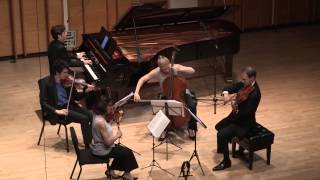
The Piano Quintet Op. 81 No. 2 in A major was composed between August 18 and October 8, 1887, and premiered in Prague on January 6, 1888. The quintet is recognized as one of the masterpieces of the form, alongside those of Schumann , Brahms , and Shostakovich . Structured in four movements, it blends Dvořák 's characteristic expressive lyricism with elements of Czech folk music; these elements include styles and forms of song and dance, but not actual folk melodies.
The second movement of Antonín Dvořák's Piano Quintet No. 2 in A major, Op. 81 , is one of the most celebrated pieces in all of Romantic chamber music. It bears the marking " Andante con moto " and is written in dumka form, a musical form typical of the Slavic tradition (especially Ukrainian and Czech) characterized by the alternation of melancholic and meditative sections with livelier, rhythmic, and sometimes dance-like ones. Dvořák frequently used it as a symbol of national identity.
The movement begins with an introspective and nostalgic theme, introduced by the piano with an almost improvisational air. The strings respond with a warm and expressive melody, creating an atmosphere of serene, melancholic melancholy. Throughout the movement, this restrained sadness is interrupted by more lively episodes, in which the rhythm becomes more pronounced and the music takes on an almost folk or dance-like character. These transitions are not abrupt but organic, like shifts in mood. Moreover, the movement does not follow a strict classical form (such as ABA or sonata form ) but a free structure based on contrasts, typical of the dumka . Thematic materials reappear transformed, giving the movement unity without formal rigidity. As for its instrumentation, the piano plays a central role, both lyrically and rhythmically, while the strings (especially the cello and viola) contribute emotional depth and a dark timbre in the slow sections. The dialogue between the instruments is intimate, almost confessional, reinforcing its chamber music character.
Today it is offered to us by the quintet made up of Assaff Weisman , piano; Carmit Zori and Itamar Zorman , violins; Dov Scheindlin , viola and Michal Korman, cello.
Reinhold Glière (1875–1956) was a post-Romantic composer born in Kiev (then part of the Soviet Union ). His father was a highly skilled multi-instrumentalist, proficient in the flute, clarinet, French horn, and trumpet, among others. Glière composed numerous operas, ballets, concertos, and symphonic works, among other pieces, for which he received the title of People's Artist of the USSR (1938) and the Stalin Prize, First Class, three times (1946, 1948, 1950).
Catalogue of Glière's works . His works are classified by their Opus number (from the Latin opus 'work') or by their abbreviation Op .
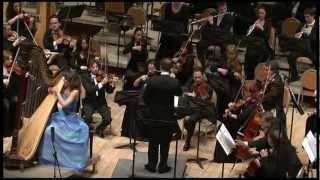
Reinhold Glière 's Harp Concerto in E- flat major, Op. 74, is one of the most important and beloved works in the harp repertoire, both by harpists and audiences. Composed in 1938 (premiered in 1939), it was written by Glière in collaboration with the renowned Soviet harpist Ksenia Erdely , who provided crucial technical advice at a time when the harp rarely featured as a solo instrument with an orchestra. This work helped solidify the harp's status as a concert instrument in the 20th century . It is a late Romantic work, highly melodic, lyrical, and accessible, as although composed in the 20th century , it is not avant-garde: its harmonic language is reminiscent of Tchaikovsky, Rachmaninoff , and Russian Romanticism, and its music combines characteristics that recall both the Viennese Classical style and Russian Romantic nationalism. The harp is presented in both a virtuosic and lyrical manner, avoiding mere decorative effect, to the point that it is a required piece in numerous international competitions and recitals. Many harpists consider it the quintessential Romantic concerto in the harp repertoire.
Structure. It consists of the three traditional movements ( fast-slow-fast ): I (0'05") ALLEGRO MODERATO. Broad and noble, with an almost epic character, where the harp constantly dialogues with the orchestra, a dialogue that demands great control of the sound and clarity in the fast passages. The movement is written in sonata form (exposition of two contrasting themes-development-recapitulation and coda). II (11'27") THEME AND VARIATIONS. A movement of intimate and poetic character, which allows the harp to showcase different colors: arpeggios, harmonics, tremolos. This is one of the movements most appreciated for its expressiveness. III (23´00´´) ALLEGRO GIOCOSO in rondo form with a lively, rhythmic and dance-like main theme that reappears several times and some contrasting, more virtuosic episodes with modulations to nearby keys, culminating the work with a display of virtuosity and energy.
Today we offer the version by harpist Elizaveta Bushueva accompanied by the Moscow City Symphony "Russian Philharmonic" conducted by maestro Sergey Tararin .
Teresa Catalán Sánchez ( Iruña/Pamplona , April 12, 1951) is a composer from Navarre and Professor Emerita of the Royal Conservatory of Music of Madrid , with a doctorate in Philosophy of Art and winner of the National Music Prize in 2017 in the Composition category. Catalán studied music at the Pablo Sarasate Conservatory in Pamplona, where she trained with teachers such as Fernando Remacha, Luis Morondo, Juan Eraso, Luis Taberna, and Pilar Bayona , graduating in Piano and Composition . She was a student in Agustín González Acilu 's Contemporary Composition Techniques courses between 1983 and 1986. She attended advanced courses at the Accademia Musicale Chigiana in Siena, Italy, with the composer Franco Donatoni and received masterclasses from Luigi Nono, Samuel Adler, Yihzak Sadai, George Benjamin, Luca Lombardi, Leo Brouwer , and Guy Reibel, among others. In 1985, she co-founded the Pamplona Composers' Group , Iruñeako Taldea Musikagilleak . Five years later, in 1990, she won the chair of Composition, Instrumentation, and Musical Forms at the Royal Conservatory of Music in Madrid through competitive examination. Catalán holds a doctorate in Philosophy of Art from the University of Valencia (2005) and is the author of several books, articles, and papers. In 2021 he received the Prince of Viana Culture Prize , an award given by the Government of Navarre .
She has published some of her compositions in Spain and Germany , which are part of the curriculum at various conservatories. She is a member of the State Council for the Performing Arts and Music, the Artistic Council of Music, and the Council of the Teatro Real . She has also been an elected member of Jakiunde, the Academy of Sciences, Arts, and Letters of the Basque Country, Navarre, and Aquitaine, since 2015. As a composer, her work falls within the realm of post-tonal music, and most of her compositions are instrumental, including piano and chamber works, though she has also composed orchestral and choral pieces. She has received commissions from numerous performers and various national and international institutions, and her work has been programmed at festivals in several countries across Europe and the Americas.
Azul is a symphonic composition by Teresa Catalán , written for symphony orchestra and premiered by the Spanish National Orchestra under the direction of Jaime Martín at the National Music Auditorium in Madrid as part of the 21/22 Symphonic Cycle concerts . The work was commissioned by the Spanish National Orchestra and Choir and explores a profound reflection on time: Catalán presents time as something fleeting, fickle, and elusive, linked to both the traditions and fashions of each era. This negotiation between the artist's inner voice, tradition, and aesthetic innovation is one of the central themes of Azul . Although there is no detailed programmatic statement for the work, the title Azul perhaps alludes to sensory and emotional associations with the color—as occurs in other pieces by Catalán where color functions as an evocative image—though here it is more abstract and linked to internal aspects of the musical discourse.
Today it is presented to us by the National Orchestra of Spain conducted by Maestro Jaime Martín.
Recommended music videos for all tastes




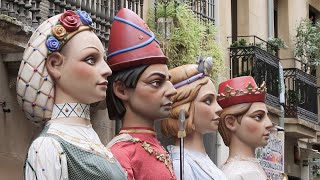


Recommended peculiar videos
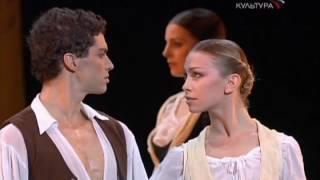
Georges Bizet (1838-1875) was a French pianist and composer who did not achieve widespread success during his lifetime. Bizet won several prizes throughout his brilliant career as a student at the Paris Conservatory , including the prestigious Prix de Rome in 1857. He was recognized as an exceptional pianist, although he chose not to capitalize on his talent and rarely performed in public. His most famous opera, Carmen , was a sensational success at its premiere, which he did not live to enjoy, as he died three months later of a heart attack at the age of 39. The rest of his works were largely forgotten and only gradually rediscovered in the 20th century. Despite this, he is now considered a leading figure of the 19th century and a brilliant and imaginative composer.
L'Arlesienne (The Girl from Arles ) is a work of incidental music composed by Georges Bizet for voice, chorus and chamber orchestra, consisting of 27 numbers of varying lengths, of which we will see today a selection arranged in the form of a suite and choreographed by Roland Petit and performed by Jérémie Bélingard , Eleonora Abbagnato and the Paris Opera Ballet
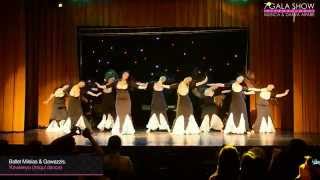
Kawleeya (also spelled Kawliya, Kaouliya, or Kawleeya) is a highly expressive and energetic folk and urban dance from Iraq , commonly seen at celebrations, weddings, and popular performances. Historically associated with the Kawliyya communities (often linked to the Dom people, culturally related to the Romani of the Middle East ), the dance is now practiced and enjoyed by people throughout Iraq , not just this group. Over time, it has become a symbol of joy, feminine strength, and popular character, spreading to theaters, television, and festivals. Kawleeya music is fast, rhythmic, and very powerful, inviting intense and repetitive, almost hypnotic movements, with a strong emphasis on long, loose hair (rapid head turns, shaking, and tossing), which becomes almost an instrument in the dance. All of this is set within powerful movements of the hips, shoulders, and torso, expressed with a defiant, proud, and explosive attitude, deeply connected to the ground and the rhythm. Today, the Kawleeya represents Iraqi cultural identity, as well as the expression of feminine celebration, freedom, and strength.
Today, the Mileias Ballet presents it to us.
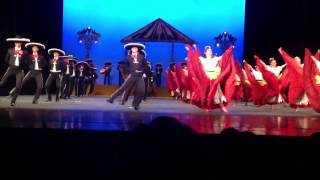
The dance of Jalisco refers primarily to the folk dance of Jalisco, one of the most representative of Mexico . This dance originated in the state of Jalisco , especially in Guadalajara and its surrounding areas, and is known for its energy, vibrant colors, and strong connection to mariachi music . The dance itself has indigenous, Spanish, and mestizo influences. It gained national and international popularity in the late 19th and early 20th centuries. Today, we also witness the expression of the Jarabe Tapatío, considered the national dance of Mexico , which represents the courtship between a man and a woman, where the charro hat plays a symbolic role. It is a dance of strong, rhythmic footwork, especially by the man, and elegant, flirtatious movements by the woman. A symbol of Mexican identity worldwide, it is present at national festivals, celebrations, and is taught in folk dance schools as a foundation of Mexican folklore .
Today we have the Amalia Hernández Ballet , also known as the Ballet Folklórico de México , which has more than 60 of its own choreographies with performances throughout Mexico and more than 100 international tours visiting a total of 60 countries.
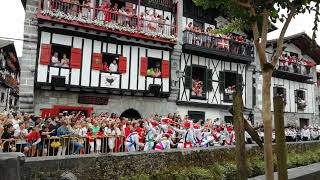
The Lesakako Zubigaineko dantza ( Dance on the Bridge of Lesaka ) is one of the most popular dances in the Basque Country . Coinciding with the San Fermín festival on July 7th, the sword dancers of Lesaka perform the Zubigain ("On the Bridge") on the parapet of the Onin River. It is a big day for the people of Lesaka, and for those who dance the Zubigain , it is undoubtedly the most emotional moment of the festival. It seems that this dance commemorates the peace pact between the neighborhoods of this town in the 15th century . However, outside of historical context, some specialists have seen it as closely related to the rituals of the San Juan solstice. In reality, it may be a ritual that arose from different traditions. It is worth noting that on San Fermín Day in 2019, for the first time in history, three women performed as swordsmen after several years of rehearsals.
Recommended music videos for children






Various Wikipedia articles have been used to write these texts.
The texts of Videomusicalis are written in Basque, Spanish and English.