

Recommended music videos for initiation to classical music


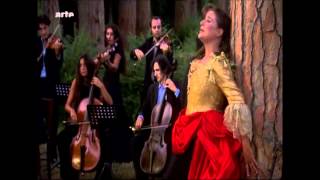
George Frideric Handel ( 1685-1759) was born in Halle, Germany. A naturalized British citizen, he is one of the leading figures in the history of music and, certainly, of the Baroque period . As a child, he began receiving lessons in harmony and counterpoint from Friedrich Zachow , the organist of Halle , with whom he also learned to play the oboe, violin, and organ. At the age of 18, he moved to Hamburg, where he wrote his first two operas. After three years, he traveled to Florence and then to Rome . In 1710, he returned to Germany and from there to London , where he settled for the rest of his life. Despite the complete silence with which he protected his privacy, his homosexuality seems clear. Of his abundant musical output, the oratorio Messiah stands out as one of the masterpieces of music history . He died at the age of 74 at his home.
Ombra mai fu is the opening aria from Handel 's opera Xerxes, premiered in 1738. The opera was a commercial failure, with only five performances in London after its premiere. In the 19th century , however, this aria was rediscovered and has become one of Handel 's best-known pieces. Originally composed to be sung by a castrato (in modern performances of Xerxes it is sung by a countertenor, contralto , or mezzo-soprano ).
In the version we offer today, the aria is sung by the Italian artist Cecilia Bartoli , a light mezzo-soprano with refined technique, who has performed in the main halls of the world with the most renowned conductors.

Franz Schubert (1797-1828) was an Austrian composer who, at the age of 11, was admitted to the Choir of the Imperial Chapel in Vienna, where he studied under Salieri . At that time, theater ( opera ) was the lucrative genre, in which he never achieved success, so he devoted himself to lieder (songs), among which his Ave Maria and the song collection Die Belle Müllerin (The Fair Maid of the Mill) stand out. Despite dying at the age of 31, he left behind more than 1,500 works, including numerous piano and chamber music pieces, 8 symphonies, concertos, incidental music, sacred music (among others, 7 Masses, 1 Oratorio, and 1 Requiem), several singspiels (small operettas), some operas, and more than 600 short vocal works, primarily the aforementioned lieder.
A nocturne is a piece of vocal or instrumental music with a sweet melody and free structure. The term " nocturne " was initially used in the 18th century to refer to a piece played at evening parties. In its most common form (that is, as a single-movement piece generally written for solo piano), the genre was cultivated primarily in the 19th century . The most famous exponent of this music was Frédéric Chopin , who wrote 21 works in this genre.
Today we offer Schubert 's Nocturne in Eb , op. 148, performed by the AlesiEnsemble consisting of Marco Alesi (piano), Martin Osiak (violin) and Anna Martin-Scrase (cello).

Bun-Ching Lam Born in Hong Kong in 1954, he developed a deep interest in music and composition from a young age. He studied piano and music theory before moving to the United States , where he furthered his training in contemporary composition. His work combines elements of Chinese musical tradition with modern Western techniques, creating a highly personal and expressive sonic language. Throughout his career, he has composed orchestral pieces, chamber music, and vocal works performed at major international festivals and concert halls. He has also collaborated with leading ensembles and soloists specializing in contemporary music. The poetic sensibility of his compositions and his attention to instrumental color have earned him recognition within the current musical landscape. In addition to composing, he has been actively involved in educational and cultural projects related to the dissemination of contemporary music.
The pipa (Chinese: 琵琶; pinyin: pipa; Wade-Giles: p'i2-pa2) is a traditional Chinese plucked string instrument similar to the Western lute. The pipa is first mentioned in texts dating back to the 2nd century BC . Several traditional Eastern instruments have been derived from it, the best known of which are the biwa , the Vietnamese dan toba , and the Korean bipa , which is no longer in use, with only a few surviving instruments in museums. The word pipa is formed from the two Chinese syllables "pi" (琵) and "pa" (琶). These refer to the two most common ways of playing the instrument: "pi" means to push with the index finger of the right hand from right to left, and "pa" means to pull with the thumb of the right hand from left to right, in the correct direction.
The pipa is a four-stringed instrument with a pear-shaped soundbox. It has a short, curved neck with thirty frets that cover part of the soundboard, providing a wide range. After the Tang Dynasty (618-907), the pipa maintained its popularity as both a solo and ensemble instrument. Initially played with a plectrum, this was later abandoned in favor of fingernails. Playing technique demands great dexterity, allowing for the production of virtuosic and descriptive effects. Techniques include tremolos achieved by brushing the five fingers, pizzicato, harmonics, noises, and more.
Bun-Ching Lam 's work, Run, presents a brief but intensely developed structure, articulated through the technical and timbral exploration of the pipa . Formally, the piece is organized as a process of continuous expansion: it begins with rhythmic cells and isolated gestures that evolve into sections of greater sonic density and virtuosity. The central structural element is the "run" or "lun," a cyclical tremolo technique that functions both as an expressive resource and as an organizing principle of the musical discourse. The texture alternates moments of cumulative tension with more suspended passages, creating dynamic and spatial contrasts. Harmonically, the work eschews traditional tonality, relying instead on modal colors and open resonances. The transformed repetition of motifs generates internal unity, while the contemporary notation expands the instrument's idiomatic possibilities without losing references to the Chinese musical tradition.
Today we witness the performance offered by the young virtuoso Zhou Yi .
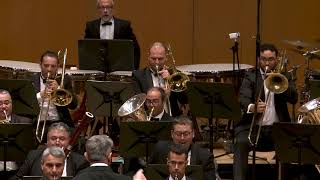
Joseph Kosma ( Budapest , October 22, 1905 – La Roche-Guyon, France , August 7, 1969) was a Hungarian- born composer who became a French citizen in 1946. He was a student of Béla Bartók , with whom he studied at the Liszt Academy in Budapest , graduating in composition and orchestral conducting. In 1928, he won a scholarship to study at the Berlin Conservatory , where he met Lilli Apel , also a musician, who later became his wife. Appointed conductor of the Berlin Opera Orchestra , he left that position to join Bertolt Brecht 's traveling theater company. From then on, he composed music for theater and songs, whose principal performers included Yves Montand and Juliette Gréco .
His most famous song is Les feuilles mortes (The Dead Leaves), with lyrics by Prévert . The melody of its refrain became a classic jazz tune, titled Autumn Leaves .
Today it is offered to us by the Municipal Music Band of A Coruña .
Recommended classical music videos

Johann Sebastian Bach (1685-1750) Today we encounter one of the three giants of Western music, along with Mozart and Beethoven . He was a German violinist, organist, conductor, and composer, born in Eisenach into one of the most prominent musical families in history. In 1703, he obtained his first job in Arndtstadt , and in 1707 he moved to Mühlhausen as organist, where he married his cousin Maria Barbara, with whom he had seven children. After his wife's death in 1720, following a year and a half of widowhood, he remarried Maria Magdalena, with whom he had another thirteen children. In 1723, he moved to Leipzig , where he resided until his death at the age of 65. His influence has been notable on Haydn , Mozart , Beethoven , Mendelssohn , Schumann , Chopin , and many other renowned composers.
The catalogue of Bach's works, or Bach-Werke-Verzeichnis , better known by its acronym BWV , consists of a numbered index of all the composer's works, arranged thematically by genre and whether vocal or instrumental, and used by scholars and musicians worldwide. This catalogue was created in 1950 by the German musicologist Wolfgang Schmieder .
The English Suite No. 6 Johann Sebastian Bach 's work seems to unfold like a solemn and luminous journey. From the opening, expansive, and virtuosic PRELUDE (0'03"), the piece unfolds a constant dialogue between energy and elegance, as if each dance were recounting episodes from an imaginary court. The ALLEMANDE (7'56") and the COURANTE (10'06") maintain a fluid and contrapuntal character, while the SARABANDE (11'18") introduces an introspective and almost meditative moment. The GAVOTTES (14'43") provide rhythmic contrast and lightness before a final, exuberant GIGUE (17'08") , constructed with great motor drive. Formally, the Suite follows the Baroque model of a succession of stylized dances, organized in the key of D minor , in this case, and unified through imitative devices and harmonic sequences. Bach employs complex polyphonic textures, extensive modulations, and a balance between structural rigor and expressiveness. The composition is notable for its symmetrical architecture and the technical demands that anticipate modern keyboard virtuosity.
Today it is offered to us by the Swiss pianist Beatrice Berrut .
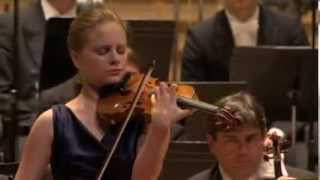
Pyotr Tchaikovsky (1840-1893) was a Russian composer who graduated from the Saint Petersburg Conservatory and wrote works in various genres, though he achieved his greatest success with his ballets. In 1859, he obtained a civil service position in the Ministry of Justice , which he left after three years to dedicate himself solely to music. His personal life was plagued by continuous crises, beginning with the death of his mother and compounded by repressed homosexuality, which led him into a marriage that lasted only a few months. He wrote more than 150 compositions, including piano works, quartets, suites, symphonies, concertos, choral pieces, cantatas, operas, and ballets. He died at the age of 53 and is considered one of the greatest composers in history.
Tchaikovsky 's Violin Concerto in D major, Op. 35 , one of the most renowned and challenging violin concertos ever performed, leaves two indelible impressions: the virtuosity inherent in its construction and the beauty of its melodies. The first movement (0:05) Allegro Moderato begins with a brief, lyrical introduction, followed by the melodies that comprise the rest of the movement. The second movement (18:32) Canzonetta: Andante opens with a chordal passage played by the woodwinds and horns, leading into a tranquil, traditional Russian melody that serves as a seamless bridge to the third movement (24:40) Allegro Vivacissimo, inspired by Russian themes developed through numerous variations in orchestration, rhythm, and melody.
Julia Fischer (1983), today's soloist, is one of the world's leading violinists, a German virtuoso of both violin and piano. At the age of twelve, she won the Yehudi Menuhin Violin Prize, and in 2007, she was named "Artist of the Year" by Gramophon magazine. Without going into too much detail about her numerous and prestigious accolades, suffice it to say that, although dedicated to the violin, she has never abandoned the piano. She has performed in the world's leading concert halls with the finest conductors as a violin soloist, and occasionally as a piano soloist as well. Today, she presents this Tchaikovsky Concerto accompanied by the Orchestre Philharmonique de Radio France, conducted by the Russian maestro Vasily Petrenko (1976).
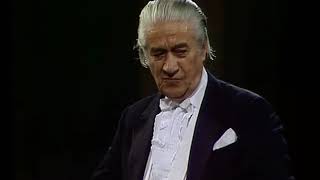
Anton Bruckner (1824-1896) was an Austrian organist and composer obsessed with perfection, to the point that his works were continually revised and reformed, resulting in numerous versions of his compositions today. After his father's death, he entered the nearby St. Florian Monastery as a choirboy, where he received musical instruction. In 1855, he was appointed organist of Ignatiuskirche Cathedral , but this did not prevent him from continuing his composition studies through various means. In 1864, he began publishing his first compositions, which from then on focused primarily on religious and symphonic works.
Symphony No. 4 in E-flat major (WAB 104) is one of Anton Bruckner 's most popular compositions. It was written in 1874 and revised several times until 1888. Its premiere took place in Vienna , conducted by Hans Richter , and was a great success. The subtitle " Romantic" was used by the composer himself and refers to the concept of medieval romance , as reflected in Wagner 's Lohengrin and Siegfried . The symphony is structured in four movements: the first movement (1'10"), "Bewegt, nicht zu schnel," evokes an Alpine sunrise in sonata form , whose opening horn motif generates much of the material. The SECOND MOVEMENT (22'36"), ANDANTE, QUASI ALLEGRETTO, is conceived as a heartfelt prayer and alternates a funeral march with episodes of melancholic chorale. The THIRD MOVEMENT (40'39"), SCHERZO: BEWEGT - TRIO: NICHT ZU SCHNELL. KEINESFALLS SCHLEPPEND, is an energetic scherzo , depicting a lively hunting scene with its traditional horn, contrasting with a peaceful rustic dance trio. IV (51'39") FINALE: BEWEGT, DOCH NIGHT ZU SCHNELL. The final movement masterfully merges the previous themes and evolves into a complex sonata form that culminates in a grand climax.
Sergiu Celibidace (1912-1996) was a Romanian conductor with close ties to Zen Buddhist doctrines who, in addition to his musical studies, also studied philosophy and mathematics. He was principal conductor of the Berlin Philharmonic and worked with orchestras in Stockholm, Stuttgart, and Paris until 1979, when he was appointed principal conductor of the Munich Philharmonic, with which he remained until his death. In recognition of his work, he received important awards from the Federal Republic of Germany , despite his reluctance to make recordings, arguing that they did not capture the full range of nuances. For many critics, Celibidache is the greatest conductor in history, specializing in Bruckner, for whom he felt a particular affinity.
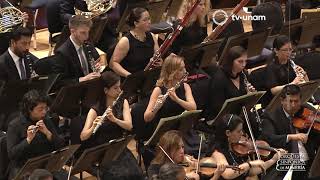
Gabriela Ortiz Torres ( Mexico City , December 20, 1964) is a Mexican composer and professor whose work encompasses orchestral, chamber, and solo music, as well as compositions for dance, theater, and film. Her work has been performed at international festivals, including the Festival Internacional Cervantino, the Festival de Bourges in France, Electrifying Exotica, and the Plugged Festival in London , among others. She has been a member of the National College of Mexico since 2022. In 2025, she received three Grammy Awards : Best Classical Compilation, Best Orchestral Performance, and Best Contemporary Classical Composition for the ballet Revolución Diamantina .
Gabriela belongs to the growing generation of female composers born in the second half of the 20th century . She studied piano at the Ollin Yoliztli School in Mexico City , and later with Robert Saxton at the Guildhall School of Music and Drama. She earned a doctorate in Composition and Electroacoustic Music from The City University of London under the supervision of Simon Emmerson (1992). From her early work, her ability to synthesize a syncretic style stands out, in which "European tradition, new resources from contemporary music and jazz, and Mexican elements, even from pre-Hispanic Mexico , are combined." In February 2019, she was inducted into the Mexican Academy of Arts .
Gabriela Ortiz 's work, Antrópolis, presents a flexible structure based on the superimposition of rhythmic cells and timbral contrasts inspired by the urban nightlife of Mexico City . Formally , the composition is organized into linked sections that alternate between sonic accumulation and release, avoiding a closed, classical scheme. Rhythm constitutes the main axis of the musical discourse: syncopated patterns, ostinati, and irregular accents generate a constant sensation of movement and collective energy. Structurally , Ortiz employs progressive instrumental layers that expand the sonic density until reaching a climax of great intensity. The percussion It plays an articulating role, while the brass and woodwinds contribute contrasting colors. The work combines elements of contemporary music with references to popular and electronic genres, creating a dynamic and urban sonic identity.
Recommended music videos for all tastes

Bill Evans (1929–1980) was an American jazz pianist and composer. His work encompasses cool jazz, post-bop , and modal music . He is considered one of the most important jazz pianists in history for his impressionistic use of harmony, his interpretations of the traditional jazz repertoire, his adoption of the block chord style, and his characteristic rhythmically independent melodic lines. His influence can be seen in numerous renowned pianists, such as Brad Mehldau, Chick Corea, Keith Jarrett, and Herbie Hancock . Many of Evans ' compositions, such as " Waltz for Debby" and "Time Remembered," have become jazz standards, played and recorded by countless artists. Evans received 31 Grammy Award nominations and won 7 awards, and was inducted into the DownBeat Jazz Hall of Fame .

La Niña de La Puebla ( Dolores Jiménez Alcántara : 1908-1999) was an actress and one of the greatest flamenco singers of all time. She lost her sight in a tragic accident three days after birth. At the age of eight, she began receiving special musical training. According to her own account, she decided to dedicate herself to professional singing after hearing Niño de Marchena perform. At the age of 20, she performed for the first time at a festival in Morón de la Frontera , after which her career took off with great success. She was married to another notable flamenco singer, Luquitas de Marchena (1913-1965), and from this marriage came two other well-known artists of Andalusian folklore: Adelfa Soto and Pepe Soto . She undertook numerous tours throughout Spain with shows that changed annually.
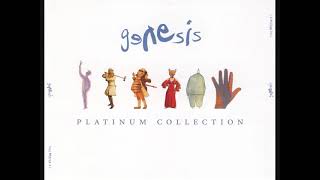
Genesis is a British rock band formed in 1967. From the 1980s onwards, Genesis 's music underwent a fundamental stylistic shift from progressive rock to pop-rock , coinciding with their period of greatest commercial success and with Phil Collins as their most visible frontman. Failing to achieve the expected success, Genesis officially disbanded in 1998. However, in 2007 they undertook a successful concert tour of Europe and the USA , and in 2020 their return to the stage was announced. With approximately 155 million albums sold, Genesis ranks among the thirty best-selling bands of all time. Throughout their career, they have received four Grammy Award nominations and one win, three American Music Award nominations and one win, and Brit Award nominations .

Taeyeon ( Jeonju , March 9, 1989) is a South Korean singer and a legendary K-pop icon, recognized as one of South Korea 's most influential artists. She rose to fame in 2007 after debuting as the leader and main vocalist of the girl group Girls' Generation . In 2015, she debuted as a solo artist with her first mini-album, I , which reached number one on the US Billboard World Albums chart and included a single of the same name, which topped the Gaon Singles Chart in South Korea . Having sold over 1.3 million physical albums and over 20 million digital singles, she is one of South Korea 's best-selling solo artists. In 2022, she was the best-selling solo artist in the history of the Gaon Album Chart .
Recommended peculiar videos
Pyotr Tchaikovsky (1840-1893) was a Russian composer who graduated from the Saint Petersburg Conservatory and wrote works in various musical genres, though he achieved his greatest fame with his ballets. Unfortunately, his personal life was plagued by continuous crises from the age of 14, when his mother died, also as a consequence of repressed homosexuality, which forced him into a marriage that lasted only a few months. He wrote more than 150 compositions, including piano works, quartets, suites, symphonies, concertos, choral pieces, cantatas, operas, and ballets. He died at the age of 53 and is currently considered one of the greatest composers in history.
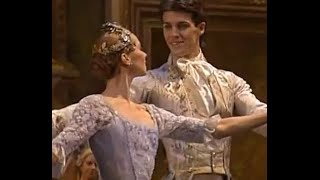
Sleeping Beauty, one of the most frequently performed ballets in the classical repertoire, is a fairy tale/ballet structured in a prologue and three acts, whose music was written by Tchaikovsky in 1889 with choreography by Marius Petipa and a libretto by Ivan Vsevolozhsky and Petipa himself; the plot was based on the story of Sleeping Beauty in the woods , which is about a young princess condemned to sleep eternally until true love comes into her life.
Today we present the entire ballet choreographed by Rudolf Nureyev with Roberto and Diana Vishneva as protagonists accompanied by the Corps de Ballet of La Scala Theatre .

La Poulido de Gèmo is a Provençal folk group from the town of Gémenos , in southern France , near Marseille. Founded in 1982, its mission is to preserve and promote Provençal traditions: dance, music, song, traditional costumes, and the Provençal language. The name “La Poulido de Gèmo” roughly translates to “The Beauty of Gémenos” in Provençal. The group brings together people of all ages and participates in national and international festivals, representing Provençal culture through traditional dances accompanied by live folk music. They are dedicated to the preservation of historical costumes and offer cultural and linguistic workshops, in addition to organizing the “ Festival des Cultures du Monde de Gémenos” (Gémenos World Cultures Festival ). They are also affiliated with CIOFF France , a UNESCO -affiliated organization dedicated to the preservation of folklore and intangible cultural heritage.
The traditional dances of Provence, France, are characterized by their lively rhythm, elegant movements, and strong connection to popular and rural celebrations. They are usually danced in groups, accompanied by instruments such as the Provençal drum and flute. Circular choreography and simple steps that encourage group participation are prominent. The typical costumes, with their vibrant colors and regional details, reflect the cultural identity and historical legacy of this region in southern France .

The dance performance Stories of Singapore presents an artistic journey through Singapore 's history and cultural diversity, blending tradition and modernity in a dynamic and vibrant production. Through coordinated movements and rhythmic shifts, the dancers evoke the Malay, Chinese, Indian, and Western influences that shape the country's identity. The show features dazzling costumes, multicultural music, and choreography that alternates between gentle, ceremonial moments and fast-paced, energetic sequences. Furthermore, the lighting and visual elements help create atmospheres that symbolize different historical and social periods. The dance conveys values of coexistence, progress, and intercultural unity, demonstrating how Singapore has built a modern society while remaining connected to its traditional roots.

The Huaylarsh or Huaylas is a Peruvian folk music. It is a festive dance associated with planting or harvesting in the southern part of the central Peruvian Andes . It possibly originated during the Viceroyalty (1532-1824) for the threshing of grains or potato crops, involving feelings of love and verdure. According to the vocabulary compiled by Diego González Holguín in 1608, it could derive from the following Quechua words: Waylla : green meadow, good pasture; Waylluy : to love tenderly. The dictionary compiled by Rodolfo Cerrón Palomino in 1976 already mentions the term Huaylash : a typical dance from southern Huancayo ; Huaylas : a competitive dance between men and women.
The Huaylas dance is a folkloric expression from the central highlands of Peru , especially Junín . It is characterized by its lively and dynamic rhythm, accompanied by Andean music typically played with harp, violin, saxophone, and percussion instruments. The dancers perform rapid footwork and energetic movements that represent agricultural work and courtship. Furthermore, their colorful costumes reflect the cultural and festive identity of the Andean communities.
Recommended music videos for children






Various Wikipedia articles have been used to write these texts.
The texts of Videomusicalis are written in Basque, Spanish and English.