

From here, we join in the celebration of November 22nd—the feast day of Saint Cecilia, patron saint of musicians.
Recommended music videos for initiation to classical music


Saint Cecilia , according to the Martyrologium Hieronymianum , was a Roman noblewoman who converted to Christianity and was martyred for her faith sometime between 180 and 230 AD. In the Catholic Church , she is the patron saint of music and other guilds and municipalities; her attributes are the organ, the lute, and roses. Around 480 AD, anonymous Acts of Saint Cecilia appeared in Latin, which were transmitted in numerous manuscripts and translated into Greek. According to this text, Cecilia was a virgin from a Roman senatorial family, the Metelli , who had converted to Christianity in her childhood. Cecilia 's artistic reputation was probably the result of a mistranslation of the Acts of Saint Cecilia .
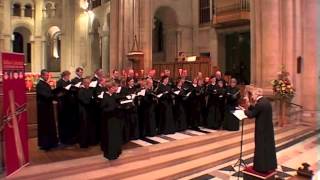
Cantantibus organis is an antiphon or hymn in honor of St. Cecilia , of which numerous versions have been written. Today we offer the composition written by Peter Philips and performed by The Priory Singers, conducted by Harry Grindle .
Wolfgang Amadeus Mozart (1756-1791) is considered one of the three giants of musical composition, along with Bach and Beethoven . A child prodigy born in Salzburg , Austria, he mastered the keyboard and violin by the age of six and began composing, prompting his father, Leopold , to exhibit him on grueling tours of various European courts. A prolific composer (more than 600 works written from the age of five until his death), he cultivated all kinds of musical genres: piano works, chamber music, symphonies, concertos, choral works, operas—each and every one a masterpiece of its kind. His operas The Magic Flute, Don Giovanni, Così fan tutte, and The Marriage of Figaro are among the ten most frequently performed operas in the world. He died in Vienna at the age of 35.
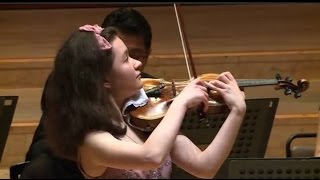
The Rondo in C major, K. 373, was composed in 1781 as a brilliant piece for violin and orchestra by Mozart during his Viennese period. The work seems to depict an elegant and luminous dialogue between the soloist and the orchestra, where each return of the main theme contributes balance and classical clarity. Formally, it follows a rondo structure , organized in the A–B–A–C–A sequence, characteristic of Mozart's classicism . The main theme, lyrical and refined, contrasts with modulating and more virtuosic episodes. The homophonic texture, symmetrical phrases, and harmonic transparency reinforce the serene, gallant, and expressive character of the composition.
Today it is offered to us by the Russian violinist Anna Savkina accompanied by the Sendai Philharmonic Chamber Orchestra .

Emilie Luise Friederika Mayer (1812–1883) was a German Romantic composer and sculptor. Although she began her composition studies relatively late in life, she was a prolific and highly acclaimed composer throughout Europe during her lifetime, composing at least eight major symphonies, fifteen concert overtures, and a large amount of chamber music. On August 28, 1840, her life took a tragic turn when her father shot himself, ending his life on the twenty-sixth anniversary of her mother's death. The author Marie Silling wrote of this event: "The death of her father caused her first and greatest profound sorrow; in order to numb this pain, she buried herself in work."
In Wenn der Abendstern die Rosen (When the Roses Rise at Evening Star), Emilie Mayer creates an intimate and melancholic atmosphere where the appearance of the evening star seems to awaken the memory of a lost love. The vocal line unfolds with a natural, declamatory quality, while the piano develops a flowing and expressive accompaniment that reinforces the contemplative nature of the poem. Formally, the work follows a flexible ternary structure, with a lyrical opening section , a central episode of greater harmonic tension, and a varied return of the initial material. The writing reveals Romantic traits through subtle modulations, contrasting dynamics, and a highly sensitive, cantabile phrasing. The interplay between text and music continually intensifies the emotional expression.
Today it is offered to us by soprano Rahel Pailer accompanied on the piano by Julia Pleninger .
Joaquín Rodrigo (1901-1999) He was a Spanish composer born in Sagunto ( Valencia ). At the age of seven, he became blind; at nine, he began his studies in solfège, violin, and piano; at 16, harmony and composition; and at 22, he began composing his first works. At 26, he moved to Paris , where he studied with Paul Dukas for five years. In 1940, he premiered the Concierto de Aranjuez in Barcelona , which from then on would become world-renowned. He was a prolific composer who wrote works for solo instruments, for piano with another instrument, for string orchestra, wind orchestra, and symphony orchestra, concertos for various instruments, songs, symphonic-choral works, and stage music, always maintaining the clarity, delicacy, and distinction characteristic of his music.
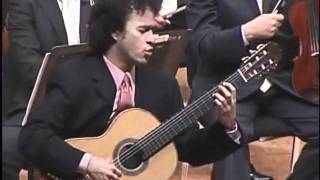
The Concierto de Aranjuez is Rodrigo 's most famous work; a work that made him world famous and consists of three movements, of which today we offer the SECOND, ADAGIO ; a particularly popular movement that has been performed by numerous opera and popular song singers; This movement "represents a dialogue between the guitar and the 'solo' instruments (English horn, bassoon, oboe, French horn). Musically, the movement unfolds like a nocturnal confidence between the guitar and the orchestra, opening with a serene pulse upon which emerges an English horn melody laden with nostalgia, almost like a memory that refuses to fade. The guitar responds delicately, not to impose itself, but to accompany and nuance each emotion. Rodrigo constructs an atmosphere of restrained melancholy, punctuated by silences and breaths that amplify the sense of intimacy. Gradually, the tension builds until it reaches a dramatic and passionate climax, before returning to a fragile, suspended calm, as if time itself were frozen in the gardens of Aranjuez ."
Today, guitarist Cecilio Perera presents it to us, accompanied by the UNAM Philharmonic Orchestra conducted by Maestro Bojan Sudjic .
Recommended classical music videos
Johann Sebastian Bach (1685-1750) was a German violinist, organist, conductor, and composer. Born in Eisenach into one of history's most prominent musical families, which boasts over 30 famous composers, he obtained his first position as a court musician for the Prince of Arndtstadt in 1703. In 1707, he moved to Mühlhausen as organist, where he married his cousin Maria Barbara, with whom he had seven children. After his wife's death in 1720, he remarried a year and a half later to Maria Magdalena, with whom he had thirteen more children. In 1723, he moved to Leipzig , where he resided until his death at the age of 65. A prolific composer, he is considered one of the three greatest geniuses in the history of music, along with Mozart and Beethoven.
The catalogue of Bach's works , or Bach-Werke-Verzeichnis , better known by its acronym BWV , consists of a numbered index of all the composer's works, arranged thematically by genre and whether vocal or instrumental, and used by scholars and musicians worldwide. This catalogue was created in 1950 by the German musicologist Wolfgang Schmieder .
Johann Sebastian Bach composed French Suite No. 3 during his time in Köthen , a period dedicated to writing keyboard music for home and pedagogical use. The work reflects the elegant and dance-like atmosphere of the French court, while maintaining the composer's characteristic German contrapuntal rigor. The Suite is written in D minor and organized into short movements inspired by Baroque dances: ALLEMANDE (0:00), COURANTE (3:30), SARABANDE (5:36), ANGLAISE (9:08), MENUET-TRIO (10:42), and GIGUE (13:48). Formally, each section has a binary structure, with repetitions and thematic contrasts that balance symmetry and fluidity. Bach develops ornate melodies over a stable harmonic accompaniment, using imitations and rhythmic sequences that provide internal cohesion. Furthermore, the alternation of tempos and characters generates constant emotional variety. The result is a refined, expressive, and technically balanced work.
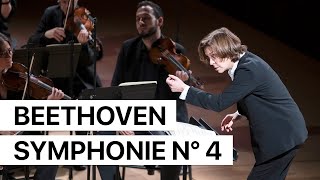
Ludwig van Beethoven (1770-1827), along with Bach and Mozart, forms part of the trio of giants of Western music. Born on December 16, 1770, in Bonn , his Flemish father attempted to showcase him as a second Mozart , though this proved a notable failure. Despite this, from the age of nine, the organist Christian Gottlob Neefe captivated him with the study of Bach , whose influence he would always hold dear. In 1787, he moved to Vienna intending to study with Mozart , but his mother's death forced him to return to Bonn a few days later. After five years, he returned to Vienna, where he was able to study with Haydn and Salieri . However, his career as an excellent pianist was cut short by the deafness that struck him the following year, leaving him completely unable to play.
The catalogue of Beethoven's works . There are 138 musical works composed by Beethoven , ordered by numbers known as opus ("work" in Latin) or its abbreviation op. assigned by the composer's publishers during his lifetime. In addition, there are 205 other works without opus numbers that were published posthumously. These works were assigned WoO numbers (Werke ohne Opuszahl, "works without opus numbers"). This catalogue was first compiled by Georg Kinsky and Hans Halm (Das Werk Beethovens) in 1955.
Ludwig van Beethoven 's Symphony No. 4 in B-flat major, Op. 60, was composed in 1806, dedicated to Count Franz von Oppersdorff , and premiered in March 1807 at a private concert held at the home of Prince Joseph Franz von Lobkowitz , along with the Coriolan Overture and Piano Concerto No. 4. Several historians suggest that Beethoven 's odd-numbered symphonies are majestic, while his even-numbered ones are serene. This is especially true of the symphony we are presenting today, which contrasts sharply with the immensely heroic Symphony No. 3 in E-flat major and the tragic Symphony No. 5 in C minor . Robert Schumann described this work as "a slender Greek maiden between two Nordic giants."
Structure . The Symphony consists of FOUR MOVEMENTS: I (0'27") ADAGIO-ALLEGRO VIVACE. The FIRST MOVEMENT presents a slow Introduction in B-flat major that generates harmonic tension through modulations and expectant silences. Following this section is an ALLEGRO VIVACE (2'57") in sonata form , characterized by an energetic first theme and a more lyrical and contrasting second theme . The development explores motivic fragmentation and intense dynamic changes, while the recapitulation reaffirms the main key with orchestral brilliance and classical balance . II (12'19") ADAGIO. The SECOND MOVEMENT adopts a lyrical structure close to abbreviated sonata form , dominated by a cantabile theme presented by clarinets and bassoons over a steady rhythmic accompaniment. Beethoven develops timbral variations and subtle modulations that expand the expressiveness without losing serenity. The contrapuntal texture and the refined use of the strings produce a contemplative atmosphere. The Coda recovers the initial intimate character and concludes with a feeling of suspended calm and profound elegance . III (21'56") ALLEGRO VIVACE – TRIO: A LITTLE LESS ALLEGRO. The THIRD MOVEMENT replaces the classical minuet with a scherzo of great rhythmic vitality and abrupt contrasts. Beethoven employs an expanded structure in which the Trio reappears twice, creating an unusual symmetrical design. The scherzo is based on ascending impulses and displaced accents that generate metric instability. The Trio , more solemn and expansive, introduces a choral character in the brass and woodwinds, balancing the impetuous energy of the outer sections . IV (27'43") ALLEGRO MA NON TROPPO. The FINAL MOVEMENT unfolds in sonata form with extraordinary lightness and orchestral virtuosity. The main theme is characterized by its perpetual drive and rapid figurations that traverse the entire orchestra. Beethoven combines humor, rhythmic precision, and dynamic contrasts to maintain continuous tension. The development intensifies the movement through brief sequences and modulations, while the Coda accelerates the sense of impetus to a brilliant, energetic, and affirmative conclusion.
Today we present the version by the Insula Orchestra conducted by the French maestro Laurence Equilbey .
Gabriel Pierné (1863-1937), born in Metz, France, was a French organist, composer, and conductor. The son of a piano teacher and a singing teacher, he entered the Paris Conservatory , where he sang with César Franck and Jules Massenet. In 1882, he won first prize for organ and second prize at the Grand Prix de Rome with his cantata Edith . At the Conservatory, he met Claude Debussy , with whom he would always maintain a close relationship. He achieved great renown as a conductor, while as a composer he tackled all genres with equal success. Among his notable works are those dedicated to the Basque Country , such as Ramuntxo and the Fantaisie basque for violin and orchestra; also noteworthy are his oratorios, symphonic poems, numerous comic operettas, and ballets.
Ramuntcho is incidental music written by Gabriel Pierné in 1908 for a stage adaptation of Pierre Loti 's 1897 novel Ramuntcho , which was presented at the Théâtre de l'Odéon in Paris . In 1910, Pierné arranged the music into two orchestral suites, of which we present here the Overture , or Rhapsody of Basque Themes . Although the original composition often evokes melancholic feelings, as is common in Basque music, in this vibrant overture that feeling is enriched by lively folk dance rhythms, one of the key elements of which is the quintuple rhythm of the zortziko , a novelty in European music at the time.
Today we can see it thanks to the Cincinnati Symphony Youth Orchestra conducted by Maestro William C. White.
Gerald Raphael Finzi (1901–1956) was a British composer of the first half of the 20th century , a successor to the great English tradition embodied by Elgar, Parry, Stanford, and Vaughan Williams . His popular image is that of a lyrical pastoralist, which made his music seem somewhat outdated during his lifetime. In his case, one cannot speak of experimentation, much less modernity; but he possessed a unique, personal voice, recognizable in his song cycles and choral works, demonstrating a perfect communion between word and music, a result of his profound knowledge of English literature. Works such as the Cello Concerto and the Intimations of Immortality reveal him as more than just a miniaturist. His popularity has steadily increased since his death.
The Ode (from the Latin oda , borrowed in turn from the Greek οdé, originally “song” or “act of singing”, and very soon afterwards also used to designate hymns and songs of praise, joyful or funereal, of war or magical) is a lyric poem and a poetic composition of elevated or sung tone that deals with diverse subjects, among which is included a reflection of the poet.
In the Ode for St. Cecilia, Op. 30, Finzi constructs a meditative and expansive musical architecture, articulated through contrasting sections that alternate between contemplative lyricism and greater contrapuntal density. The form closely follows the textual development, avoiding rigid, traditional schemes and favoring organic continuity. The choral writing, supported by an orchestra with a transparent texture, intensifies the spiritual and ceremonial character inherent in the work.
Today we present this ceremonial choral ode written by Gerald Finzi for tenor, chorus and orchestra, performed by tenor Kameron Ghanavati accompanied by the Eastman-Rochester Choir and the Eastman Philharmonia Orchestra, conducted by Maestro William Weinert .
Recommended music videos for all tastes
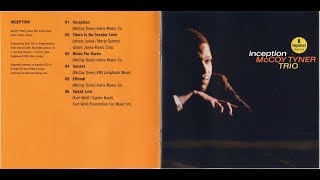
Alfred McCoy Tyner was born in Philadelphia in 1938 and became one of the most influential pianists in the history of jazz . From a young age, he displayed great musical talent and began studying piano as a teenager, inspired by bebop figures like Bud Powell . His career reached international fame when he joined John Coltrane 's quartet in the 1960s, a period in which he developed a powerful style full of harmonic innovation. In addition to accompanying great artists, he also built a successful career as a soloist and composer, recording numerous albums and winning several Grammy Awards . His music profoundly marked the evolution of modern jazz and continues to be admired by musicians and fans worldwide.

Jennifer Lopez was born on July 24, 1969, in the Bronx, New York , to a family of Puerto Rican descent. From a young age, she showed an interest in music, dance, and acting, and began her artistic career as a dancer on television programs. She achieved great fame in 1997 for her portrayal of the singer Selena Quintanilla in the film Selena . Shortly after, she launched a successful music career with pop and Latin music that made her one of the most recognized artists in the world. In addition to being a singer and actress, she has worked as a producer, businesswoman, and judge on television competitions. Throughout her career, she has stood out for her talent, discipline, and ability to remain relevant in the international entertainment industry.

Zhou Shen , also known as Charlie Zhou , was born in 1992 in Shaoyang, China , and has become one of the most recognizable voices in contemporary Asian music thanks to his extraordinary vocal range and interpretive sensitivity. His sex is undoubtedly male, although confusion about this is quite common because he has a very high-pitched voice and an exceptionally wide range. He is a tenor known for his singing technique, which allows him to reach very high notes with a timbre that leads many people to mistake his voice for female.
During her childhood, she lived for several years in Ukraine , where she began to develop her interest in music while studying dentistry before dedicating herself fully to singing. She achieved great popularity in 2014 after participating in the television program The Voice of China , where she surprised audiences with her high, crystalline voice. Since then, she has performed numerous soundtracks for Chinese series and films, establishing a career marked by versatility and emotion. Her style combines elements of pop, traditional Chinese music , and modern orchestral arrangements .

Ilse Delange was born on May 13, 1977, in Almelo, Netherlands , and showed a strong inclination towards country and pop music from a young age. Her career took off in the late 1990s with the album *World of Hurt* , which was a huge success in her country and established her as one of the most prominent voices on the Dutch music scene. Over the years, Ilse evolved towards a broader sound, incorporating pop and rock influences, which allowed her to remain relevant. In 2014, she achieved international recognition by representing her country at the 2014 Eurovision Song Contest as part of the duo The Common Linnets , achieving a highly celebrated second place. In addition to her music career, she has participated as a coach on television talent shows, further solidifying her artistic influence. Her emotional and relatable style has made her a key figure in contemporary European music.
Recommended peculiar videos
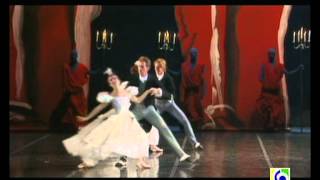
Hector Berlioz (1803-1869) was a French composer, a leading figure in program music and Romanticism in general. He studied in Paris and Rome , where he was on a scholarship, focusing on the hymns of his teacher, Jean-François Lesueur , and heavily imitating Beethoven , then unknown in France ; he also influenced Gluck, Mozart, Étienne Méhul , and Carl Maria von Weber. In 1844, he composed the first known work for saxophone, the sextet Sacred Song , which premiered under Berlioz 's baton with Adolphe Sax on saxophone. He also wrote several symphonies (among which his most famous work, the Symphonie fantastique, stands out), overtures, operas, cantatas, sacred music, non-theatrical dramatic works, choral works, and numerous songs.
The Symphonie Fantastique, Op. 14, subtitled "An Episode in the Life of an Artist ," considered the first example of program music (music that aims to evoke ideas and images in the listener's mind, musically representing a scene, image, or mood), is inspired by a literary work that narrates the dreams of a young musician. Structured in five movements, today we present the second, "A Ball" : After being rejected by his beloved in the first movement, they are reunited at a ball. The music then adopts a waltz tempo , thus depicting the protagonist's restlessness. The "idée fixe" appears, briefly interrupting the waltz, and reappears at the end of the movement.

Morris dancing is an English folk tradition that appears to have originated between the Middle Ages and the Renaissance , possibly influenced by older European dances. Over time, it became established as a community expression, especially in rural English villages, where groups of dancers, generally men, although women also participate today, perform rhythmic choreographies accompanied by live music. The dancers often wear distinctive costumes with bells on their legs, scarves, or sticks that they strike together to mark the beat. There are several regional styles, such as Cotswold and Border , each with its own steps, rhythms, and attire. More than just a dance, Morris dancing symbolizes the celebration of the seasons, especially the arrival of spring, and maintains a strong connection to English cultural identity and oral tradition.

The Chobi dance , originating in Iraq , is a collective expression deeply rooted in the country's social and festive life, especially at weddings and community celebrations. Its history dates back to ancient traditions in rural Mesopotamia, where dance served to strengthen group unity and celebrate important moments. It is danced in a line or semicircle, with participants holding hands, while following the lead of a person who sets the rhythm and the changes in steps.
The movements are vigorous, rhythmic, and repetitive, with firm steps that strike the ground in sync with the music. This music often includes traditional instruments such as the mizmar and the tabl, creating an energetic and infectious atmosphere. The Chobi is not only entertainment but also a symbol of cultural identity, cooperation, and collective pride, passed down from generation to generation. It is the most well-known folk dance in Iraq , especially among Arab communities, and is very common at weddings, celebrations, and festivals.

The Snake Dance (0'05") is a folk dance of pre-Hispanic origin, currently performed in several K'iche' villages during patron saint festivals. The first reference to this dance was made by Friar Francisco Ximénez in 1722. Later, in the first half of the 20th century , it was studied by ethnographers Samuel K. Lothrop and Franz Termer . It is a dance characterized by its rhythmic energy and strong community symbolism. The participants, generally in lines or circles, imitate the movement of a snake with undulating motions, while the music sets a cheerful and repetitive beat. It stands out for its festive nature, its group coordination, and its connection to popular celebrations where cultural identity and community life are reinforced.
"El Son de la Negra" (3'16") is a traditional composition from western Mexico , originating in what is now the city of Tepic , capital of the state of Nayarit , Mexico . It is a son famous for its various versions, particularly the mariachi version. It achieved international popularity when the composer Blas Galindo , from Jalisco, included it in his chamber orchestra work "Sones de Mariachi " in 1940; thus, it has become representative of Mexican folklore internationally. In fact, it is traditional for a mariachi band to enter any event walking and playing this composition.
Recommended music videos for children






Various Wikipedia articles have been used to write these texts.
The texts of Videomusicalis are written in Basque, Spanish and English.