

Wolfgang Amadeus Mozart was born on January 27, 1756
Juan Crisóstomo de Arriaga was born on January 27, 1806
Recommended music videos for initiation to classical music


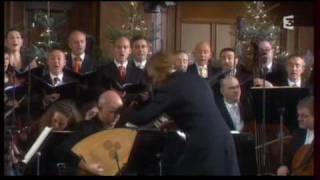
Johann Sebastian Bach (1685-1750) was a German violinist, organist, conductor, and composer. He was born in Eisenach into one of history's most prominent musical families, which boasted over 30 famous composers. In 1703, he obtained his first position as a court musician for the Prince of Arndtstadt , and in 1707, he moved to Mühlhausen as organist, where he married his cousin Maria Barbara, with whom he had seven children. After his wife's death in 1720, he remarried a year and a half later to Maria Magdalena, with whom he had thirteen more children. In 1723, he moved to Leipzig , where he resided until his death at the age of 65. A prolific composer, he is considered one of the three greatest geniuses in the history of music, along with Mozart and Beethoven.
The catalogue of Bach's works, or Bach-Werke-Verzeichnis , better known by its acronym BWV , consists of a numbered index of all the composer's works, arranged thematically by genre and whether vocal or instrumental, and used by scholars and musicians worldwide. This catalogue was created in 1950 by the German musicologist Wolfgang Schmieder .
The oratorio is a dramatic musical genre, unlike opera , without staging, costumes, or sets. Generally composed for solo voices, chorus, and symphony orchestra, sometimes with a narrator, its subject matter is frequently religious (stories from the Bible or the Gospels , the life of Jesus or the lives of saints, etc.), but it can also be secular (mythological heroes, historical themes, hymns to nature, etc.). Its main characteristics are generally: A) A general structure in several parts, frequently three (sometimes preceded by an instrumental prelude). B) The presence of a narrator (external to the action or identified with a character). C) The alternation between sung arias and recitatives.
Jauchzet, Frohlocket is the first movement of the Christmas Oratorio : it is the chorale with which the oratorio begins. From the 15th century onward, the term "chorale" began to be used to refer to the ecclesiastical hymn of the Lutheran Church , especially its cantus firmus or melody. Later, in the 18th century , the chants of the Protestant Church in general were called chorales . Similarly, organ pieces that use a chorale or a theme with similar characteristics as their basis also began to be called chorales .
Today we present the chorale Jauchzet, Frohlocket from Bach 's Christmas Oratorio conducted by Laurence Equilbey (1962), a French teacher specializing in choral repertoire.
Wolfgang Amadeus Mozart (1756-1791) is considered one of the three giants of musical composition, along with Bach and Beethoven. A child prodigy born in Salzburg, Austria, he mastered the keyboard and violin by the age of six and began composing. Taking advantage of these talents, his father, Leopold, also a composer, showcased him on grueling tours of various European courts. At seventeen, he was hired as a musician at the Salzburg court, but his restless spirit led him to travel in search of a better position, always composing prolifically. During a visit to Vienna in 1781, after being dismissed from his court post, he decided to settle in the city, where he achieved the fame he maintained for the rest of his life, despite experiencing financial difficulties.
In his final years, he composed many of his best-known symphonies, concertos, and operas, as well as his Requiem. The circumstances of his early death have been the subject of much speculation and have become the stuff of myth. According to Nicholas Till and several other music historians and critics, Mozart was always voraciously learning from other musicians and developed a splendor and maturity of style that ranged from lightness and elegance to darkness and passion. His influence on all subsequent Western music is profound; Ludwig van Beethoven wrote his early compositions in Mozart's shadow, of whom Joseph Haydn wrote that "posterity will not see such talent again for a hundred years."
An eminently prolific composer (more than 600 works written from the age of five until his death), he cultivated all kinds of musical genres: piano works, chamber music, symphonies, concertos, choral works, operas—each and every one a masterpiece of its kind. His operas The Magic Flute, Don Giovanni, Così fan tutte, and The Marriage of Figaro are among the ten most frequently performed operas worldwide. Nor can we forget his Clarinet Concerto or his Requiem, which are standard parts of the repertoire of the finest orchestras. From 1769 to 1781, he worked for the Archbishop of Salzburg; after the success of his opera Idomeneo of Crete, he was welcomed to Vienna, where he settled and achieved great fame that would accompany him until his death at the age of 35.
The serenade is a musical form conceived for string, wind, or mixed orchestras, chamber ensembles, or percussion. It was a divertissement that achieved enormous popularity during the 18th century. Serenades were often played outdoors at dusk and were a delight at evening gatherings in the gardens of aristocratic palaces. The term "serenade" comes from the Italians "sera" (evening) or "al sereno" (outdoors, under the open sky), meaning it is music to be performed outdoors at dusk. The serenade originated from the ballads lovers sang outside their beloved's window at dusk when things had gone wrong in their relationship. It is a musical genre for a small instrumental ensemble and, like the symphony, consists of several movements.
In the 18th century, it could have up to ten movements. Mozart composed thirteen serenades, usually to celebrate a social event: weddings, courtly celebrations, and so on. Mozart's serenades begin with a march movement written in sonata form; two slow movements alternate with two minuets; a rondo follows, and then a brilliant finale, which is sometimes also a march. Beethoven composed serenades for string trio (Op. 8) and for flute, violin, and viola (Op. 25). In the 19th century, serenades were composed for orchestras (Brahms, Dvořák, among others). Serenades are also conceived as songs or lieds (Schubert, Richard Strauss, Wolf, Massenet...) or to be played on an instrument, such as the piano (Albéniz, Debussy, and Ravel). In several Latin American countries, such as Colombia, Venezuela, Cuba, El Salvador, Guatemala, Mexico, Paraguay, Peru, Brazil, Chile, Argentina, and others, the term "serenade" refers to the act of bringing, usually at night, a typical and traditional string ensemble, for example, a mariachi (in the case of Mexico), a tuna (of Spanish origin but which spread throughout Hispanic America), or an Andean Creole serenade (in the case of Peru) or a Guayanesa serenade (in the case of Venezuela). These are duos or trios with performers of the country's typical instruments, to the outside of a lady's house, where the group performs and sings songs so that the man can express various feelings, usually of love, gratitude, or desires for reconciliation.
The Serenade for Strings No. 13 in G major, K. 525, known as Eine kleine Nachtmusik (A Little Night Music), is one of Mozart's most popular works, and therefore a prime example of the Classical style and the Austrian composer's compositional genius. It is a mature work, composed in 1787, the same year as the premiere of his opera Don Giovanni. Unlike some of his later works, this serenade has a light, cheerful, and carefree character, perfectly suited to the nature of this musical genre. It was composed for a string quartet or quintet: two violins, viola, and cello (with an optional double bass doubling the cello's voice).
It originally had five movements, of which only four have survived, and of which we will only see the first, Allegro: this movement masterfully illustrates sonata form (exposition-development-recapitulation), so emblematic of the Classical period. Such is the clarity of this first movement, both in its writing and in its harmonic and structural approach, that it stands as a perfect example of the characteristics of the musical style of the late 18th century: music that is pleasing, elegant, refined, transparent, and simple.
Les Dissonances (The Dissonances) is a European classical music orchestra founded in 2004 by violinist David Grimal. The orchestra, which brings together French and European musicians, is composed of international soloists, musicians from prestigious orchestras, and young talents. Today they are the performers of this movement.
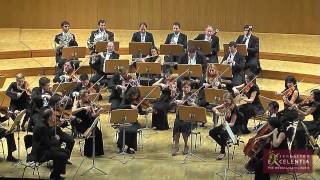
Juan Crisóstomo de Arriaga (1806-1826), known by many as the Basque Mozart , was born in Bilbao . His father, Juan Simón , came from Errigoiti , a town near Gernika , as did his mother, Maria Rosa . His father, an organist in Berriatua , Bizkaia, moved to Bilbao to pursue his business interests, which prospered, allowing him to support Juan Crisóstomo 's education in Paris , where he died ten days before his twentieth birthday. The musical legacy that has been preserved consists of three string quartets, the octet Nada y mucho , written at age 11, Overture No. 1 , the Symphony in D, several arias and cantatas as well as some motets and an opera, Los esclavos felices , written at age thirteen, of which only its overture is preserved, which we offer today.
An overture is the instrumental introduction to an opera or other dramatic work, musical or otherwise; although some independent instrumental compositions from the 19th and 20th centuries were also called overtures by their composers. The earliest operas, dating from the beginning of the 17th century , did not have overtures; however, they did have an introduction performed by vocalists that summarized the action to follow. Instrumental introductions began to be used regularly in the mid- 17th century ; the German composer Christoph Willibald Gluck was one of the first to use material from his operas for overtures. In this way, they established the emotional tone of the opera that followed.
The composition of the Overture to The Happy Slaves follows the French model, consisting of two parts: a short, slow introductory section in triple meter, and a second, faster, and more developed section. The performance is given by the Santa Cecilia Classical Orchestra, conducted by concertmaster Florian Donderer .
Astor Piazzolla (1921–1992) was born in Mar del Plata , Argentina. At the age of three, he moved with his family to New York , and at thirteen, he met Carlos Gardel . Upon returning to Argentina , he studied with Ginastera while frequenting the Café Germinal, where tango music was a daily staple. He played in various ensembles, where purists considered his innovations to be the "murder of tango." Feeling somewhat pessimistic, he moved to Paris , where he met Nadia Boulanger , who helped him believe in himself and in the potential fusion of tango with classical music. He returned to Buenos Aires so active that in 1973 he suffered a heart attack, though he continued composing and recording until 1990, when he suffered a thrombosis in Paris from which he would not recover.
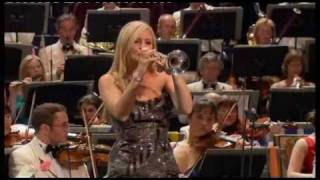
Libertango . Its title is a composite word made up of "liberty" and "tango," presumably as a symbol of the creative freedom Piazzolla sought when creating what he called the new tango , as opposed to the classic tango . Today we offer it in an arrangement for trumpet and orchestra.
Alison Balsom (1978) is an English trumpeter who performed as a soloist at the London Proms in 2009 and was named Artist of the Year by the Gramophone Awards in 2013. She has been awarded honorary doctorates from the University of Leicester and Anglia Ruskin University ; she is an honorary fellow of the Guildhall School of Music and Drama .
Today he performs as a soloist in this video.
Recommended classical music videos
Mozart and Freemasonry . Freemasonry appeared in Europe at the end of the 17th century as a selective, philanthropic, discreet, and hierarchical organization with a federal structure. Its objectives were humanist: the pursuit of truth, the study of human behavior, the sciences and the arts, and the social and moral development of individuals and society, all based on a sense of brotherhood. Its teachings are symbolized by elements of stonemasonry. With these objectives in mind, at the age of 28, Mozart joined the Masonic Lodge of Vienna as an apprentice . The following month he was promoted to the degree of Fellow Craft , and four months later he was appointed Master Mason . Influenced by the Enlightenment and the ideas of Rousseau , Mozart yearned for rationalism without subscribing to the occult practices of many of his fellow Masons. Along the same lines, according to Thomson , “music should instill feelings of humanity, wisdom and patience, virtue and honesty, loyalty to friends, and finally an understanding of freedom.” Mozart conveys many of these ideas directly in some of his operas, while at other times he does so through Masonic symbols; in any case, he began composing cantatas expressly for Freemasonry even before joining, since many of his friends were Freemasons. Works heavily influenced by Masonic ideas or symbols include the Requiem, La Clemenza di Tito , and The Magic Flute, which we are presenting today. Other famous composers were also Freemasons, such as his father Leopold Mozart, Haydn, Schubert, Liszt, Wagner, Puccini, Sibelius, Satie … there are even indications that point to Bach as a fervent Freemason.
The Magic Flute , which we suggest watching today, is an opera that premiered in Vienna , conducted by Mozart himself, two months before his death. The opera, or rather the singspiel (which blends sung and spoken text), was commissioned by a fellow lodge member, the theatrical impresario Emanuel Schikaneder, who also wrote the libretto. These were days of financial hardship and a shortage of commissions for Mozart . The work, in two acts, tells the love story between Prince Tamino and the young Pamina , daughter of the Queen of the Night . It all begins when the Queen promises Tamino her daughter's hand in marriage. To win her hand, Tamino must overcome a series of trials that represent the struggle between good and evil, light and darkness, knowledge and ignorance—all fundamental themes in Masonic doctrine. It's a kind of fairy tale with frequent comedic scenes. but full of Masonic symbolism in the embodiment of the characters, in the development of the action and even in the musical structures beginning with the first sounds of the orchestra: three orchestral touches that reflect the three knocks that the Masonic candidate makes on the door to request his admission.
The version we are offering today from the Zurich Opera House is conducted by the Austrian maestro Franz Welser-Möst .

A string quartet is a musical ensemble of four string instruments, usually two violins, a viola, and a cello, or a piece written to be performed for such a group. The string quartet is widely regarded as one of the most important forms of chamber music , given that many renowned composers from the 18th century onward wrote works for string quartet , a composition traditionally structured in four movements.
String Quartet Structure . From Joseph Haydn, Mozart, and Boccherini , the quartet became the most popular genre in the chamber music repertoire. The structure subsequently adhered to an almost immutable four-movement model, which remained a standard, although it has been questioned on several occasions. Each of the four movements is subject to a specific tempo and musical form: FIRST MOVEMENT: Allegro tempo in sonata form . SECOND MOVEMENT: Adagio tempo in song, sonata, or theme and variations form. THIRD MOVEMENT: Allegretto tempo in triple meter, in minuet or trio form (although Beethoven 's scherzo form was later used). FOURTH MOVEMENT: Presto tempo in rondo, rondo-sonata , or a rondo variant.
Juan Crisóstomo de Arriaga 's String Quartets are a collection of three quartets written for two violins, viola, and cello, composed in 1823 when the composer was only sixteen years old. The Three Quartets , structured in four movements, were the only work the composer saw published during his lifetime.
Today we present String Quartet No. 1 in D minor : I (00:02) ALLEGRO .-. II (07:24) ADAGIO CON ESPRESSIONE .-. III (13:19) MENUETTO - ALLEGRO - TRIO MODERATO .-. IV (16:59) ADAGIO – ALLEGRETTO. The performance is by the Óscar Esplá Quartet of Asisa, made up of Raquel Areal Martínez (violin), Patricia Cordero Beltrán (violin), Raquel De Benito Forriol (viola) and Montserrat Egea (cello).
Ethel Smyth (1858–1944) was an English composer and a leading figure in the suffragette movement . Born in London , she studied music in Leipzig with Heinrich von Herzogenberg . Her works included symphonies, choral pieces, chamber music, and operas. Her operas are particularly noteworthy, the most famous being *The Wreckers* and the most original, *Fête Galante *. Both were highly successful. Her compositions were praised by composers such as Tchaikovsky , Brahms , and Dvořák . In 1903, she became the first woman to have one of her works performed at the Metropolitan Opera House in New York .
In 1910, she joined the Women's Social and Political Union (WSPU). Her song "The March of the Women" (1911) became the anthem of the suffragette movement , with lyrics by Cicely Hamilton . Smyth had several relationships with women. She wrote to Harry Brewster that it was "easier for me to love my own sex passionately than yours." Deeply committed to social causes, during the First World War she served as a radiology assistant at Vichy Hospital . In 1922 she was awarded the Order of the British Empire. She died in Woking at the age of 86 and her remains were cremated. In 2020, seventy-six years after her death, she was nominated for a Grammy Award for her symphony "The Prison ," recorded in 1930.
The Wreckers (Les naufrageurs) is a French opera in three acts composed by Ethel Smyth with a libretto by Henry Brewster , which tells the story of the plundering of ships by Cornish villagers. Completed in 1904, it premiered in 1906 in Leipzig in a German translation, with cuts, before being championed by Sir Thomas Beecham and performed in 1909 in London , now in an English translation, as The Wreckers , prepared by the composer herself. Les naufrageurs was not performed in the language for which its music was composed until 2022, at Glyndebourne and Berlin.
Today the Salta Symphony Orchestra, conducted by Maestro Yeny Delgado, offers us the Overture of this opera.
Tan Dun (1957) is a Chinese composer of contemporary classical music, based in New York City , and known for the film scores for *Wò hǔ cáng lóng* , for which he won the Academy Award, Grammy Award , and BAFTA Award , and for *Hero* , as well as for the music used for the Millennium Day broadcast (2000 Today) and the music for the Opening Ceremony of the 2008 Beijing Olympic Games . In 2013, he was appointed a UNESCO Goodwill Ambassador. His departure from the commune came in the form of a government-sponsored touring Peking Opera company. From there, he went to the Central Conservatory of Music in Beijing and studied with musicians such as Tōru Takemitsu . He has written symphonies, concertos, operas, and film scores.
Concerto for Orchestra . Although a concerto is usually a piece of music for one or more solo instruments accompanied by a full orchestra, several composers have written works with the seemingly contradictory title of Concerto for Orchestra . This title is generally chosen to emphasize the soloistic and virtuosic treatment of various individual instruments or sections within the orchestra, with an emphasis on instrument changes throughout the piece. It differs from the sinfonia concertante in that it does not have a soloist or group of soloists that remains the same throughout the composition.
Today we present Tan Dun 's Concerto for Orchestra in a version by the NEC Philharmonia under the baton of the American maestro Hugh Wolff .
Recommended music videos for all tastes
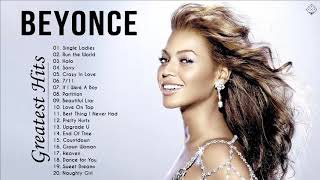
Beyoncé (1981) is an American singer, songwriter, and actress who rose to fame as the lead singer of the girl group Destiny's Child , one of the best-selling female groups in history. After leaving the group, she embarked on a new phase in her career, identifying as a contemporary feminist , and her songs often address themes of love, sexuality, and female empowerment. She made her solo debut with the album Dangerously in Love. Her self-titled song earned her five Grammy Awards. In 2010, her third album , I Am...Sasha Fierce, received six Grammy Awards. In 2016, her album Lemonade became the best-selling album worldwide. Throughout her 20-year career, she has won 24 Grammy Awards and is currently considered one of the greatest singers in popular music.
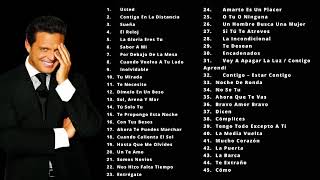
Luis Miguel Gallego Basteri (San Juan, Puerto Rico, April 19, 1970) is a Mexican singer and producer. Known for his powerful voice and stage presence, he is one of the most successful singers in Spanish-language music. He has sold approximately 100 million records worldwide and has sung in multiple genres and styles, including pop, ballads, boleros, tangos, jazz, big band, and mariachi . He is also recognized as the only Latin singer of his generation who did not cross over into the Anglo market during the Latin explosion of the 1990s and, on the contrary, remained the best-selling artist of that decade. He began his career in 1981 at the age of eleven, and at fourteen he won his first Grammy Award, becoming the youngest male artist in music history to receive such an award. Since then, he has won six Grammy Awards and six Latin Grammy Awards. In addition, he has received fourteen Billboard Latin Music Awards, three World Music Awards , twelve Lo Nuestro Awards , five Spotify Awards, among many others. In 1991, his album Romance became one of the best-selling Spanish-language albums of all time, with 14 million copies sold.

Khaled (Oran, Algeria, 1960), formerly Cheb Khaled (Cheb means young man in Arabic), is an Algerian raï singer (a genre of Algerian music). From a young age, he expressed his admiration for the Egyptian music of Ulm Kalthum and the reggae of Bob Marley . He learned to sing, play the accordion, and a homemade guitar (which children at that time made from a motor oil can and bicycle brake cables), and, following tradition, made his debut playing at circumcision ceremonies and weddings. At fourteen, he taught himself to play the real guitar, bass, accordion, and harmonica. At sixteen (1976), he dropped out of school and recorded his first album: Trigue Lissi (The Road to High School), where he glorifies truancy.
Cheb Khaled became a star in Algeria without ever having worked in radio, television, or attended a music conservatory. His raï songs dealt with women and alcohol, which led to their being banned from broadcast. In the following years, Cheb Khaled earned a living performing at weddings and cabarets. In the early 1980s, he met producer Rachid Baba Ahmed , who introduced him to the electronic sounds of Western music. In 1989, he moved to France, where he released various recordings that explored jazz , pop , and occasionally rock, funk , and Egyptian music.
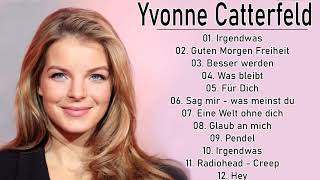
Yvonne Catterfeld (1979) is a German singer and actress. At the age of 15, she began studying piano, flute, voice, and dance simultaneously. After secondary school, she enrolled at the Leipzig Academy of Music to study jazz and pop music for two years. After several unsuccessful attempts, her fourth single, "Für Dich," became a number one hit in Germany, Austria, and Switzerland , while her debut album went platinum. She currently combines her singing career with acting.
Recommended peculiar videos
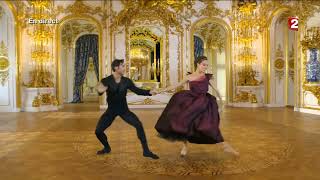
Josef Lanner (1801-1843) was a composer of ballroom dance music, considered one of the most committed composers in the renewal of the waltz , taking it from popular settings to more sophisticated contexts. He rivaled his friend Johann Strauss I by presenting his polkas and waltzes to Viennese high society.
The waltz (from the German word Walzer , derived from the German verb walzen , meaning 'to turn, to roll') is an elegant ballroom dance, documented in its definitive form since the late 18th century . It evolved from an ancient dance dating back to the 12th century , originating in Tyrol (Austria) and southern Germany . The waltz achieved its status as a noble dance in Vienna during the 1760s, quickly spreading to other countries. Some authors believe the waltz originated from the volte or volta , a triple-time dance practiced during the 16th century . The word "waltz" itself emerged in the 8th century , when this dance was introduced into opera and ballet . Its most significant characteristic is its 3/4 time signature.
Today the Vienna State Ballet offers us Die Romantiker Walzer by Josef Lanner.

Kuchipudi is a classical Indian dance style originating in the state of Andhra Pradesh . It is characterized as a dramatic dance-drama that blends elements of pure dance (nritta), expressive dance (nritya), and storytelling through dance (natya). Performances often depict mythological and social themes, with characters introduced and developed through song and movement.
Tarangam, in the context of art, especially in Kuchipudi dance, refers to a traditional piece involving the dancer dancing (1'34") on the rim of a brass plate. This practice symbolizes the dancer's connection with the divine and the overcoming of earthly limitations.

Camotes National High School (CNHS) is a public high school established around 1946 and located in the barangay (neighborhood) of Southern Poblacion , in the municipality of San Francisco , on Pacijan Island, part of the Camotes Islands archipelago, Cebu Province, Philippines . With a strong commitment to quality education and promoting safety and environmental awareness, CNHS leads several local development and disaster preparedness initiatives, serving not only its students but also the community of San Francisco and the surrounding islands. Currently, it has nearly 1,000 students and approximately 22 teachers, and is known for being a "child-friendly school" and a hub for Information and Communication Technologies (ICT) on the island.
Today we present one of his performances at a 2023 Festival.
ShakeUp Music reimagined the Magic Flute duet "Papageno/Papagena" as a colorful bird aria by Mozart . Listen to a visual Twitter storm created by our feathered friends. (Excerpted from the commentary below this video)
Recommended music videos for children





Various Wikipedia articles and relevant information on Artificial Intelligence were used to prepare these texts.
The texts of Videomusicalis are written in Basque, Spanish and English.